I was standing in the middle of a kitchen that smelled like burnt toast and too‑much ambition. My friend had dared me to turn a humble flank steak into a meal that would impress a crowd, and I was about to test the limits of my own culinary ego. The moment the pan hissed, the sizzling sound echoed like applause, and the aroma of seared meat mingled with the citrusy tang of orange juice, I knew we were onto something extraordinary.
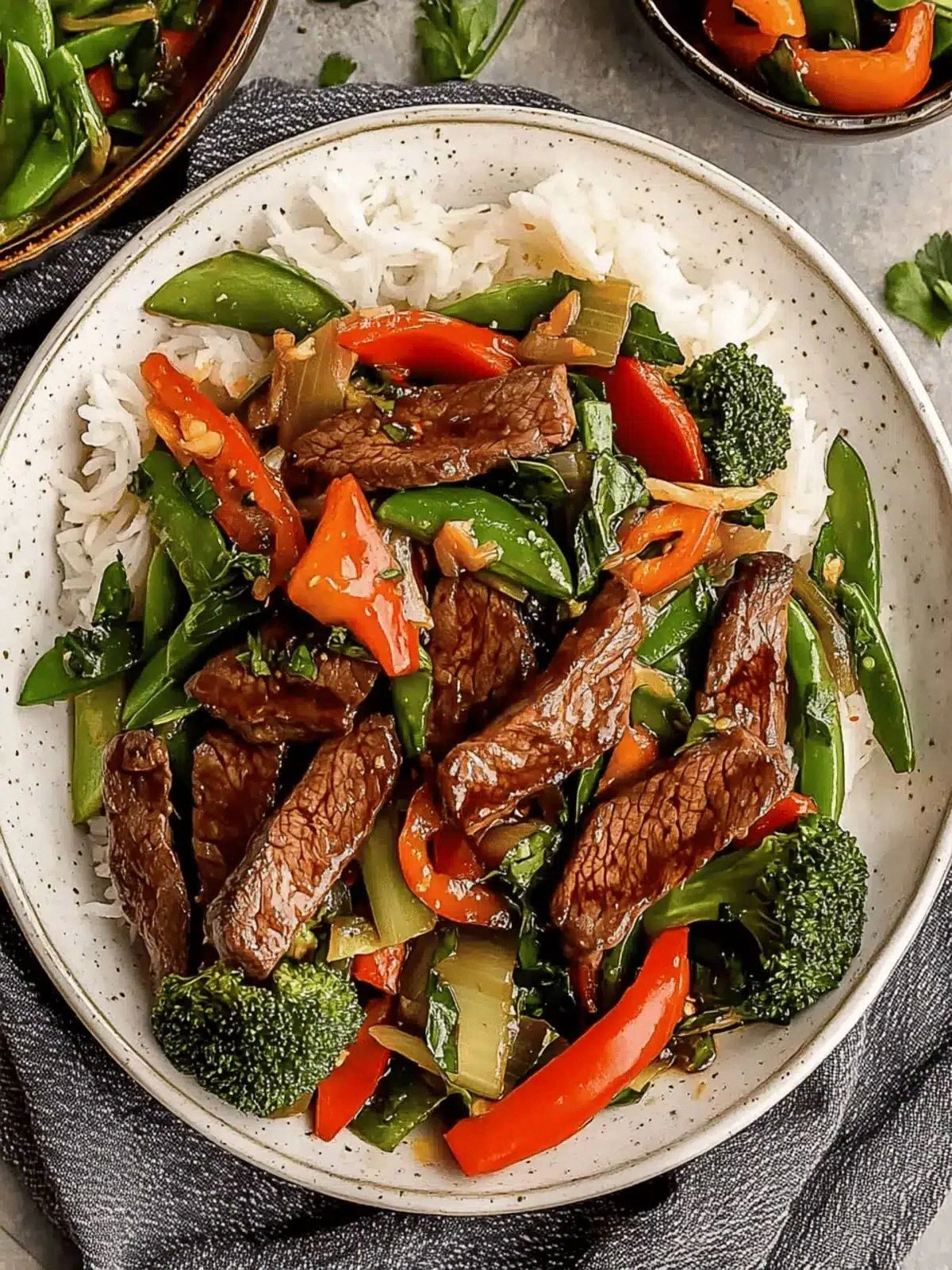
Picture the plate: a glossy, caramelized strip of steak sliced thin, surrounded by a riot of colors—crimson bell pepper, emerald bok choy, ivory snow peas, and the bright orange of carrots. The sauce, a velvety blend of soy, ginger, and honey, clings to every bite, while sesame seeds add a subtle crunch that feels like a secret handshake between flavor and texture. This is not just a stir‑fry; it’s a symphony of umami, sweetness, and a hint of heat that keeps your palate dancing.
What sets this version apart is that it’s engineered to deliver maximum flavor while keeping the prep time under thirty minutes. Every ingredient has a purpose: the orange juice brightens the sauce, the cornstarch thickens it without a heavy hand, and the sesame oil gives that nutty finish that elevates the dish from good to unforgettable. I dare you to taste this and not go back for seconds—trust me, you’ll be begging for seconds.
If you’ve ever struggled with getting steak to stay tender in a quick stir‑fry, you’re not alone—and I’ve got the fix. The trick lies in slicing against the grain and marinating briefly in the sauce, which locks in moisture and infuses flavor. Picture yourself pulling this out of the pan, the whole kitchen smelling incredible, and watching the steam curl like a fragrant cloud. Let me walk you through every single step—by the end, you’ll wonder how you ever made it any other way.
What Makes This Version Stand Out
- Flavor: The combination of citrus and soy creates a bright, savory base that cuts through the richness of the steak, turning each bite into a refreshing burst.
- Texture: The quick sear locks in juices, while the vegetables retain a satisfying crunch that shatters like thin ice when bitten.
- Simplicity: With only two prep steps—marinate and stir‑fry—you can assemble a gourmet plate without a culinary degree.
- Uniqueness: The use of orange juice and sesame seeds gives this dish a signature twist that sets it apart from the usual soy‑based stir‑fries.
- Crowd Reaction: Friends rave about the balance of sweet and salty; it’s the kind of dish that turns a casual dinner into a conversation starter.
- Ingredient Quality: Fresh, high‑quality produce and lean steak mean the dish tastes like a five‑star restaurant, yet it’s made in your own kitchen.
- Cooking Method: High‑heat, quick cooking preserves nutrients and keeps the vegetables vibrant.
- Make‑Ahead Potential: The sauce can be pre‑made and stored; the steak can be marinated overnight for deeper flavor.
Inside the Ingredient List
The Flavor Base
The sauce is the heart of this dish, where low‑sodium soy or coconut aminos meet fresh orange juice to create a sweet‑savory profile. The acidity from the citrus cuts through the fat of the steak, while the soy provides depth. If you skip the orange juice, the dish becomes flat and overly salty; the sauce loses its bright lift.
The Texture Crew
Broccoli, snow peas, carrots, and bok choy bring a spectrum of textures—from crunchy to tender. The cornstarch or tapioca starch thickens the sauce, giving it a silky coat that lingers on the meat and veggies. A pinch of sesame oil adds a nutty aroma that enhances the overall mouthfeel.
The Unexpected Star
Red pepper flakes and sesame seeds are the subtle surprise elements. The flakes provide a gentle heat that awakens the palate, while the seeds add a textural pop and a burst of toasted flavor. If you prefer a milder dish, reduce the flakes to a quarter‑teaspoon.
The Final Flourish
Green onions finish the dish with a fresh, sharp bite, balancing the sweetness of the sauce. They also add a pop of color that makes the plate Instagram‑ready. Serve over steamed rice or noodles for a complete meal; the grains soak up the sauce, creating a cohesive taste experience.
Everything's prepped? Good. Let's get into the real action.
The Method — Step by Step
- Trim the flank steak and slice it thinly against the grain into bite‑size strips. This reduces toughness and allows the steak to cook evenly. Keep the strips in a shallow dish so they don’t clump together.
- In a bowl, whisk together soy sauce, orange juice, rice vinegar, grated ginger, minced garlic, honey, and cornstarch until the starch dissolves. The mixture should look glossy; if it’s too thick, add a splash of water to thin it out. This is the sauce that will coat everything.
- Add the steak strips to the sauce, tossing to coat. Let it marinate for at least 15 minutes—no more than 30—to infuse flavor without over‑softening the meat. The longer the steak sits, the more pronounced the citrus notes.
- Heat a wok or large skillet over high heat and add sesame oil. Once the oil shimmers, add the marinated steak in a single layer. Let it sear without stirring for 1–2 minutes to develop a caramelized crust. Flip the strips and sear the other side for another minute.
- Remove the steak to a plate and set aside. In the same pan, add a splash of oil if needed and toss in the broccoli, carrots, and snow peas first, as they take longer to cook. Stir‑fry for 2 minutes, then add the bok choy and bell pepper, cooking until the greens wilt but remain crisp.
- Watch Out: Don’t overcrowd the pan—this lowers the temperature and causes vegetables to steam rather than sear. Use a larger wok or do it in batches if necessary.
- Return the steak to the pan, pour the remaining sauce, and toss everything together. The sauce should thicken slightly and coat the steak and veggies like velvet. Let it cook for an additional 2 minutes so the flavors meld.
- Sprinkle in red pepper flakes, sesame seeds, and green onions. Stir quickly to distribute the heat and garnish. Serve immediately over steamed rice or noodles, and enjoy the burst of flavors.
That's it—you did it. But hold on, I've got a few more tricks that'll take this to another level.
Insider Tricks for Flawless Results
The Temperature Rule Nobody Follows
High heat is essential for a perfect sear; if the pan isn’t hot enough, the steak will steam and lose that coveted crust. I’ve learned that a pre‑heated wok will retain heat even with the addition of oil, giving you that instant sizzle that signals readiness.
Why Your Nose Knows Best
When the sauce starts to bubble and the edges pull away from the pan, you can trust your nose to tell you the dish is ready. The aroma of caramelized ginger and toasted sesame will guide you to the moment of truth.
The 5-Minute Rest That Changes Everything
Letting the steak rest for 5 minutes after searing allows the juices to redistribute, ensuring every bite is succulent. Skipping this step leaves the meat dry and less flavorful.
Keep the Veggies Crisp
Add harder vegetables like broccoli first, then softer ones like bok choy. This staggered addition keeps each vegetable at its optimal texture, preventing overcooking.
Balance the Sweetness
If the sauce tastes too sweet, a dash of rice vinegar or a pinch of salt can balance the flavors. Taste as you go—this dish is forgiving but rewards attention to detail.
The Perfect Garnish
A quick drizzle of sesame oil right before serving adds a glossy finish and a burst of aroma. Sprinkle extra sesame seeds for crunch and a nutty undertone.
Creative Twists and Variations
This recipe is a playground. Here are some of my favorite ways to switch things up:
Spicy Korean Fusion
Swap sesame oil for a splash of gochujang and add a handful of kimchi. The dish takes on a smoky, fiery kick that pairs wonderfully with chewy rice cakes.
Herb‑Infused Mediterranean
Replace soy sauce with a light fish sauce, add fresh basil and oregano, and finish with a squeeze of lemon. The result is a bright, herbaceous stir‑fry that feels like a sunny afternoon.
Vegetarian Powerhouse
Omit the steak and add tofu or tempeh for protein. The tofu absorbs the sauce beautifully, turning the dish into a plant‑based powerhouse.
Pineapple & Ginger Twist
Dice fresh pineapple and toss it in at the end. The tropical sweetness balances the savory sauce, creating a carnival of flavors.
Citrus‑Lime Burst
Add a splash of lime juice and sprinkle chopped cilantro after cooking. The zesty finish brightens the dish and adds a fresh, herbaceous aroma.
Soba Noodle Surprise
Serve the stir‑fry over buckwheat soba noodles for a nutty undertone that complements the sesame seeds and adds a chewy texture.
Storing and Bringing It Back to Life
Fridge Storage
Store the cooked dish in an airtight container for up to 3 days in the refrigerator. Keep the sauce and steak separate if you plan to reheat individually; this prevents the vegetables from becoming soggy.
Freezer Friendly
The stir‑fry freezes well for up to 2 months. Portion into freezer bags, remove excess air, and label with the date. Thaw overnight in the refrigerator before reheating.
Best Reheating Method
Reheat in a skillet over medium heat, adding a splash of water or broth to create steam. The tiny splash of water before reheating steams the dish back to perfection, keeping the veggies crisp and the sauce glossy.