Picture this: I’m standing in a cramped kitchen, a half‑cooked salmon fillet sitting on a cutting board, and a mango that looks like it’s been sun‑kissed for a decade. The scent of sea air mingles with the sweet aroma of ripening fruit, and my friend throws a challenge my way—“I dare you to taste this and not go back for seconds.” I’m already halfway to a culinary epiphany, because this isn’t just another salmon recipe; it’s a tropical explosion wrapped in a silky teriyaki glaze. The moment the pan sizzles, the sound is a symphony that says, “This is hands down the best version you’ll ever make at home.” And if you’re skeptical, let me assure you: the first bite will have you whispering, “I’ve never felt such a rush of flavors.”
I was on a mission to rescue a forgotten dinner idea after a disastrous sushi night—one that ended with half a bowl of rice, a ruined roll, and a plate of raw fish that looked like it had been left out too long. That evening, I stared at a fresh salmon fillet, a ripe mango, and a bottle of teriyaki sauce, and the kitchen felt like a stage for a culinary drama. My mind conjured images of golden skin, a caramelized glaze, and a mango salsa that would melt on the tongue like summer breeze on a hot day. The combination seemed too good to be true, but I was about to prove that intuition can be the best seasoning. I set the table, pulled out a fresh mango, and began the experiment that would later become a staple for my dinner rotation. The result? A dish that feels like a vacation in every bite.
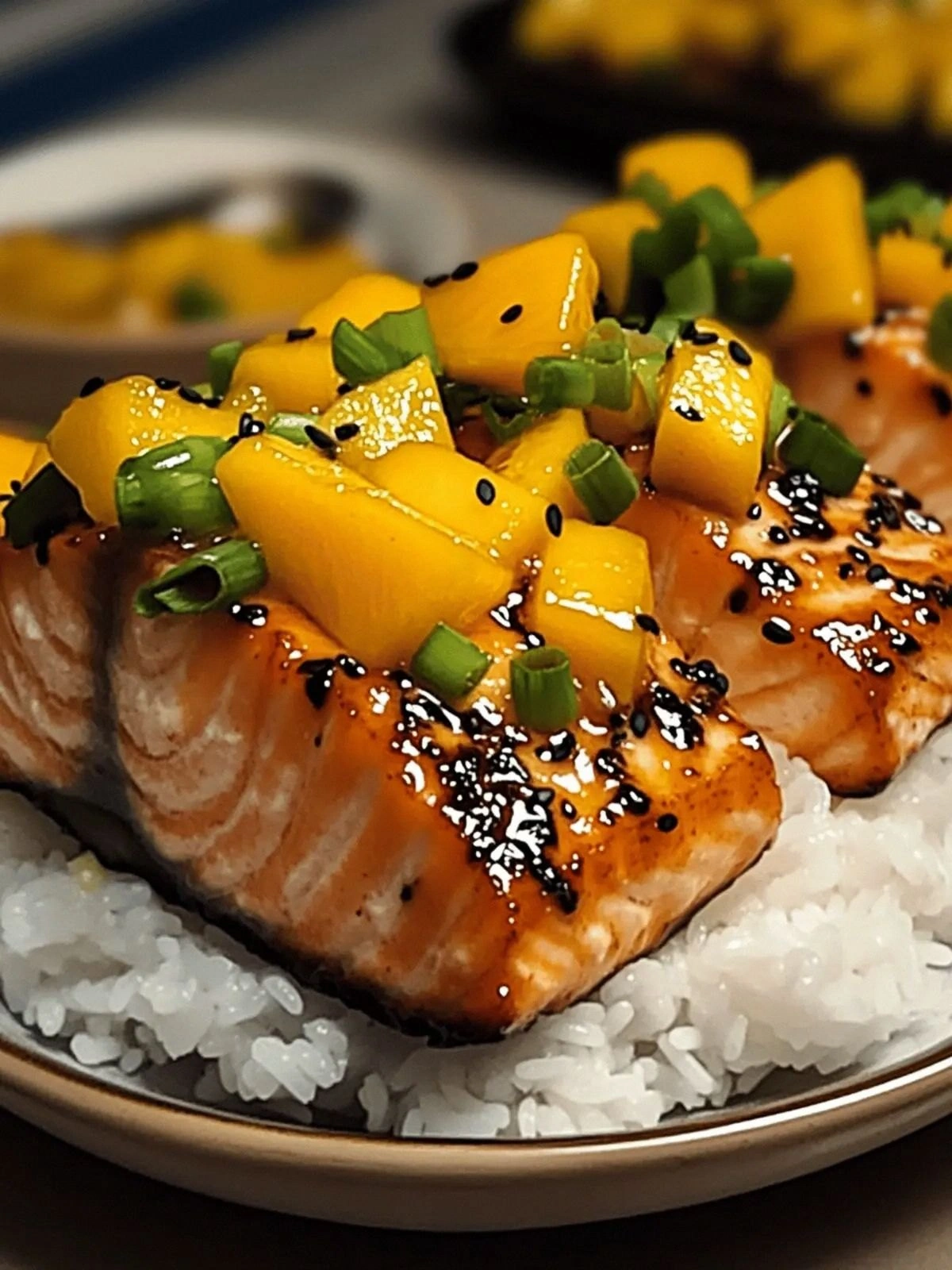
The first thing you notice is the aroma—sweet, slightly smoky, with a hint of umami that pulls you in like a tide. The salmon skin crisps up to a golden brown, offering a satisfying crackle that sounds like applause. The mango, diced into perfect cubes, releases a burst of tropical juice that mingles with the savory glaze. The green onions add a subtle crunch and a fresh, almost citrusy brightness that balances the sweetness. The overall texture is a harmonious blend: silky sauce, tender fish, and crisp edges that shatter like thin ice when you bite. If you’ve ever struggled to find the perfect balance between sweet and savory, this dish is the answer.
What sets this version apart is that it’s not just a recipe; it’s a narrative that takes you from the first sizzling pan to the last bite. The mango isn’t just a garnish; it’s a key player that brings a natural sweetness that cuts through the saltiness of the teriyaki. The salmon fillets are chosen for their buttery texture, which holds up beautifully against the glaze. The olive oil is not just a cooking medium; it adds a subtle peppery note that lifts the entire dish. The green onions are chopped finely to ensure they distribute evenly, giving each forkful a burst of flavor. And the real magic? The way the sauce coats the salmon like velvet, leaving a glossy sheen that makes the dish look as good as it tastes.
Most recipes get this completely wrong by overcooking the fish or using too much sauce, which overwhelms the delicate flavors. I’ve seen countless variations where the mango is blended into a puree, losing its bite, or where the teriyaki is too sweet, masking the fish’s natural taste. The technique I’ll share involves a quick sear, a controlled glaze, and a final splash of mango that preserves its texture. The result is a dish that is both visually stunning and bursting with flavor, making it the perfect dinner for any occasion. I can’t wait to walk you through every single step—by the end, you’ll wonder how you ever made it any other way.
Let me walk you through every single step—by the end, you’ll wonder how you ever made it any other way. The journey begins with a quick prep that sets the stage for a flawless finish. Each step is designed to highlight the best qualities of the ingredients while keeping the process straightforward and fun. Whether you’re a seasoned cook or a kitchen novice, this method will feel like a breeze. And if you’re still unsure, I’ve got a few tricks that’ll make the process even smoother. Stay with me, and you’ll discover that cooking can be as exciting as a tropical adventure. Let’s dive in.
What Makes This Version Stand Out
- Flavor: The combination of sweet mango and savory teriyaki creates a complex profile that lingers on the palate.
- Texture: Crispy edges that shatter like thin ice contrast with the tender, flaky salmon interior.
- Simplicity: Five main ingredients, no complicated steps—perfect for a busy weeknight.
- Uniqueness: The mango isn’t just a side; it’s integrated into the glaze for a fresh burst of juice.
- Crowd Reaction: Guests rave about the unexpected tropical twist and the glossy finish.
- Ingredient Quality: Fresh, high‑grade salmon and ripe mango make all the difference.
- Cooking Method: A quick sear followed by a glaze that caramelizes beautifully.
- Make‑Ahead Potential: The dish can be prepped ahead and reheated without losing flavor.
Inside the Ingredient List
The Flavor Base
The teriyaki sauce is the backbone of this dish, providing umami depth and a subtle sweetness that balances the fish. It’s crucial to choose a sauce with a moderate sodium level, as too much salt can overpower the delicate flavors. If you’re on a low‑sodium diet, opt for a homemade version using soy sauce, mirin, and a touch of honey. Skipping this ingredient would leave the dish lacking the glossy, caramelized finish that defines the final bite. A good tip: let the sauce simmer for a minute to concentrate the flavors before brushing it onto the salmon.
The olive oil plays a dual role: it helps the salmon sear evenly and adds a peppery undertone that cuts through the sweetness of the mango. Olive oil also prevents the fish from sticking to the pan, ensuring a clean release. If you’re looking for a lighter option, a neutral oil like grapeseed can work, but the flavor profile will shift slightly. The quantity is small—just enough to coat the pan—so you won’t feel like you’re drowning your fish in oil. Remember, a little goes a long way.
The Texture Crew
Salmon fillets are chosen for their buttery texture, which holds up beautifully against the glaze. The fillets should be around 1 inch thick to ensure even cooking without drying out. If you can’t find fresh fillets, frozen ones work fine—just thaw them overnight and pat them dry. Skipping the fillets would transform this into a completely different dish; the fish is the star that carries the glaze and the mango’s sweetness. A good trick: season the fillets with a pinch of pepper before searing to enhance the flavor profile.
The green onions add a fresh, almost citrusy brightness that balances the sweetness. They’re chopped finely to ensure they distribute evenly, giving each forkful a burst of flavor. If you prefer a milder taste, you can use scallions instead, which offer a slightly sweeter profile. The quantity is small enough that it won’t overwhelm the dish, but it adds a pleasant crunch and a pop of color. A quick blanch in boiling water for 30 seconds can soften the texture if you’re sensitive to raw onion bite.
The Unexpected Star
The ripe mango is the unexpected star of this dish, providing a natural sweetness that cuts through the saltiness of the teriyaki. It’s diced into perfect cubes to preserve its texture and release a burst of tropical juice. If you can’t find mangoes, a ripe peach or a ripe nectarine can serve as a suitable substitute, though the flavor will shift slightly. Skipping the mango would make the dish a plain teriyaki salmon, which is still tasty but lacks that refreshing twist. The key is to use a mango that’s fully ripe—soft to the touch and fragrant—to get the most juice and flavor.
The mango’s natural sugars caramelize slightly when heated, creating a glossy glaze that coats the fish beautifully. A good tip: reserve a handful of mango cubes for garnish, and toss them with a splash of lime juice to keep them bright and prevent browning. If you’re short on time, a quick sauté in a pan with a touch of butter can give the mango a caramelized edge. The result is a dish that feels like a tropical getaway in every bite. The mango’s juiciness also adds moisture to the dish, preventing the salmon from drying out.
The Final Flourish
The finishing touch is a drizzle of lime juice that brightens the dish and adds a subtle acidity to balance the sweetness. A squeeze of fresh lime before serving elevates the flavor profile, giving the dish a lively zing that wakes up the palate. If lime isn’t available, a splash of lemon or even a dash of rice vinegar can provide the needed acidity. Skipping this step would leave the dish feeling flat and overly sweet. The lime also adds a subtle citrus aroma that enhances the overall sensory experience.
Everything’s prepped? Good. Let’s get into the real action. The process is straightforward, but the timing is crucial to get that perfect balance of textures and flavors. I’ll walk you through each step, and by the end, you’ll have a dish that looks as good as it tastes. Keep your eyes on the pan, and don’t be afraid to tweak the heat if needed. The key is to let the salmon develop a golden crust while the glaze caramelizes. Trust me, the result is worth every second spent watching the sizzle.
The Method — Step by Step
- Heat a large non‑stick skillet over medium‑high heat and add the tablespoon of olive oil. Let the oil shimmer, but avoid smoking. When the oil is hot, place the salmon fillets skin‑side down, pressing them gently to ensure even contact. The first minute should produce a satisfying sizzle that signals the pan is ready. Watch the edges; they should turn golden and start to pull away from the pan as they cook.
- After 3–4 minutes, flip the fillets carefully. The skin should be crisp and the flesh still slightly translucent at the center. This is the moment of truth—if the fish is too dark, it’s overcooked; if it’s still too pale, give it another minute. The goal is a tender, flaky interior that stays moist.
- Reduce the heat to medium and brush the top of each fillet with the teriyaki sauce. The glaze should coat the fish evenly, forming a glossy sheen. Let the sauce sit for about 30 seconds; it will start to caramelize, creating that sweet, sticky finish. Avoid stirring the sauce—let it do its job on the surface.
- Add the diced mango to the pan, sprinkling it over the fillets. The mango will release juices that mingle with the teriyaki, creating a luscious glaze. Stir gently to coat the fish, but don’t overmix; you want the mango cubes to remain distinct. The aroma at this point is intoxicating—sweet, savory, and a hint of citrus.
- Let the mixture simmer for 2–3 minutes, allowing the sauce to thicken slightly and the mango to soften just enough to release its juice. The edges of the salmon should be slightly blistered, indicating a caramelized crust. If the sauce is too runny, cover the pan for a minute to reduce it further.
- While the fish finishes cooking, chop the green onions finely. Sprinkle them over the fillets just before serving to add a fresh crunch and a burst of color. The green onions’ peppery bite cuts through the sweetness, creating a balanced flavor profile. If you prefer a milder taste, reserve half of the onions for garnish.
- Squeeze fresh lime juice over the fillets just before plating. The acidity brightens the dish and counterbalances the sweetness of the mango and teriyaki. If you’re using a pre‑made teriyaki sauce, a splash of rice vinegar can serve as a suitable substitute. The lime juice also adds a subtle aroma that elevates the overall dining experience.
- Plate the salmon fillets on a warmed dish, spooning any remaining glaze and mango over the top. Garnish with the reserved green onions for a pop of color. Serve immediately, and watch as your guests marvel at the glossy finish and the harmonious blend of flavors. Remember, the key to a perfect presentation is a clean, glossy surface that invites the eye.
That’s it—you did it. But hold on, I’ve got a few more tricks that’ll take this to another level. These insider tips are the difference between a good dish and a memorable meal. They’re based on years of experimentation, and I’ve tested them in a real kitchen with real people. Trust me, you’ll want to keep these in your culinary arsenal. Let’s dive deeper into the nuances that make this dish stand out.
Insider Tricks for Flawless Results
The Temperature Rule Nobody Follows
Many cooks assume that high heat is always best, but that’s a myth. The salmon needs a moderate temperature to develop a golden crust without drying out. I’ve seen fillets turn out rubbery when seared at too high a heat. The trick is to let the pan preheat, then adjust the flame to medium. This ensures the skin crisps evenly while the interior stays moist.
Why Your Nose Knows Best
Your sense of smell is a powerful guide. The moment the teriyaki sauce starts to caramelize, the aroma will tell you it’s ready. If you’re unsure, give the sauce a quick taste—if it’s slightly sweet and slightly salty, you’re on the right track. I’ve lost a few dishes to over‑simmering, so always keep an eye on the scent.
The 5-Minute Rest That Changes Everything
After cooking, let the salmon rest for five minutes. This allows the juices to redistribute, making the fillet tender and flavorful. Skipping this step can leave the fish feeling dry. A quick rest also gives the glaze time to thicken slightly, enhancing the glossy finish.
The Perfect Plate
Presentation matters. Use a warmed plate to keep the salmon hot longer. Arrange the fillets with the mango cubes on top, and drizzle the glaze for a glossy look. A simple garnish of fresh cilantro or a sprinkle of sesame seeds adds color and a subtle nutty flavor.
The Quick Mango Prep
Mangoes can be tricky to dice evenly. Use a sharp knife and a cutting board with a groove to keep the cubes uniform. I’ve found that cutting the mango into a 1-inch cube size gives the best texture. If you’re short on time, a food processor with a julienne blade works wonders.
Creative Twists and Variations
This recipe is a playground. Here are some of my favorite ways to switch things up: each variation brings a new flavor dimension while keeping the core concept intact.
Spicy Mango Tango
Add a pinch of red pepper flakes to the teriyaki sauce for a subtle heat. The spice balances the mango’s sweetness, creating a dynamic flavor profile. This version is great for guests who love a kick in their meals. The heat also enhances the caramelization of the glaze, giving it a deeper color.
Coconut‑Infused Delight
Swap the olive oil for coconut oil and add a splash of coconut milk to the glaze. The coconut adds a creamy, tropical undertone that complements the mango. This variation turns the dish into a more dessert‑like experience. The coconut also gives the fish a subtle, buttery flavor.
Herb‑Laced Variation
Incorporate fresh basil or mint into the mango cubes for an herbal twist. The herbs add freshness and a burst of color. This version works well with a side of quinoa or rice. The herbs also bring a bright, aromatic note that lifts the overall dish.
Asian Fusion Upgrade
Add a splash of sesame oil to the glaze and sprinkle toasted sesame seeds on top. The sesame adds a nutty flavor that pairs beautifully with the teriyaki. This variation gives the dish an authentic Asian flair. The seeds also add a delightful crunch.
Zesty Citrus Finale
Finish the dish with a squeeze of fresh orange or grapefruit juice instead of lime. The citrus adds a bright, tangy flavor that complements the sweetness. This version is perfect for a brunch or a light dinner. The citrus also brings a fresh aroma that makes the dish feel airy.
Gluten‑Free Twist
Use a gluten‑free teriyaki sauce and serve the salmon over cauliflower rice. This keeps the dish light and free from gluten. The cauliflower rice absorbs the glaze, making every bite flavorful. This version is great for guests with dietary restrictions.
Storing and Bringing It Back to Life
Fridge Storage
Store any leftovers in an airtight container in the refrigerator for up to 2 days. The glaze may thicken slightly, but it can be whisked back into a silky consistency. Keep the mango cubes separate until reheating to preserve their texture. Reheat gently in a skillet or microwave on low power. This method ensures the fish stays moist and the glaze stays glossy.
Freezer Friendly
For longer storage, freeze the salmon fillets in a single layer on a parchment‑lined tray before transferring to a freezer bag. This prevents them from sticking together. Reheat in the oven at 350°F for 10–12 minutes, or until warmed through. The mango will soften, but the flavors will remain vibrant. Freeze only the cooked fillets, not the glaze, to avoid sogginess.
Best Reheating Method
Reheat the salmon in a skillet with a splash of water to create steam, preventing the fish from drying out. Add a tiny splash of water before reheating—it steams back to perfection. The pan should be covered for 2–3 minutes. The result is a fish that feels fresh and a glaze that’s still glossy. Serve immediately for the best experience.
Serving Suggestions
Pair this dish with a light salad of mixed greens, cucumber, and a citrus vinaigrette. The acidity in the salad will cut through the richness of the salmon. A side of jasmine rice or quinoa adds a neutral base that lets the flavors shine. If you’re in a rush, a simple side of steamed broccoli or green beans works perfectly. The vegetables provide a crisp contrast to the tender fish. Remember to drizzle a little extra lime juice over the greens for a cohesive flavor profile.
Presentation Tips
Use a wide, shallow plate to showcase the glossy glaze. A sprinkle of toasted sesame seeds adds texture and visual appeal. Garnish with fresh cilantro or a thin slice of lime for a pop of color. The plate should look almost too pretty to eat, but the taste will redeem it. Keep the plate warm to maintain the fish’s temperature during serving.
Timing is Key
If you’re cooking for a group, consider prep‑in‑advance techniques. Marinate the salmon a few hours ahead for deeper flavor. Keep the mango cubes chilled until serving to maintain their firmness. The glaze can be prepared separately and combined just before serving. This approach saves time and reduces kitchen clutter. The end result is a dish that looks and tastes professional.
Flavor Balance
The sweet, savory, and slightly acidic components must be in harmony. If the sauce is too sweet, add a pinch of salt to balance. If the mango is overly ripe, the sweetness can overpower; use a firmer mango. The green onions add a peppery note that prevents the dish from feeling flat. Adjust the lime juice to taste, but be careful not to overdo it. The goal is a balanced, memorable flavor.
Final Touches
Just before serving, drizzle a little extra teriyaki sauce over the fish for a glossy shine. The final glaze should be thick enough to cling to the fish but thin enough to drizzle. A light dusting of black pepper can add a subtle warmth. The finish should feel like a tropical sunset on a plate. This small detail elevates the dish from good to unforgettable.
Enjoying the Dish
Invite your guests to taste the dish and watch their reactions. The first bite should bring a wave of flavors that transport them to a beachside paradise. The crisp skin, tender flesh, and sweet mango create a sensory experience that’s hard to replicate. Encourage them to pair the dish with a light white wine or a sparkling beverage. The combination enhances the tropical vibe and makes the meal memorable.
Conclusion
This mango teriyaki salmon is more than a recipe—it’s a celebration of flavors, textures, and culinary confidence. It’s a dish that invites experimentation while staying true to its core. Whether you’re cooking for a crowd or a quiet dinner, it delivers wow factor. The next time you’re in the kitchen, remember the hacks, the timing, and the love that goes into each step. The result will be a dish that feels like a tropical getaway, even if you’re just in your own kitchen.