Picture this: I’m standing in my tiny kitchen, the clock ticking like an impatient metronome, and my roommate just dared me to create a salad that could actually make a meat‑lover weep. I was half‑sleepy, half‑determined, and completely convinced that the only thing that could save the day was a miracle involving salmon. The moment I cracked open a fresh fillet, the buttery pink flesh glistened under the fluorescent lights, and I swear I heard a faint whisper saying, “You’ve got this.” I tossed a handful of herbs onto the counter, the aroma of parsley, dill, and thyme instantly flooding the room, and I felt that familiar rush of excitement that only a good kitchen experiment can deliver.
The first attempt was a disaster—my salmon landed on the pan with a sizzle that sounded more like a protest than a welcome, and the crust fell apart like a soggy cardboard box. I learned fast that a dry surface, a hot pan, and a confident hand are the holy trinity for a perfect herb crust. Fast forward a few tries, a few burnt edges, and a lot of tasting (I’ll be honest — I ate half the batch before anyone else got to try it), and I finally nailed a version that makes the crust crackle like fresh snow underfoot, while the interior stays tender and flaky, practically melting on the tongue.
What makes this salad a show‑stopper isn’t just the herb‑crusted salmon; it’s the way the greens, the citrusy dressing, and the creamy avocado all dance together in perfect harmony. Imagine a chorus of flavors where the bright lemon zest sings, the herbs provide a subtle backing vocal, and the salmon takes the lead with a rich, buttery solo. Most recipes get the balance wrong, either drowning the fish in sauce or leaving the greens wilted and boring. Here, every element is meticulously calibrated to keep the palate engaged from the first forkful to the last bite.
And now, the secret weapon you didn’t see coming: a splash of white wine in the pan deglaze, which creates a glossy finish on the crust and adds a whisper of acidity that elevates the whole dish. I dare you to taste this and not go back for seconds. Let me walk you through every single step — by the end, you’ll wonder how you ever made it any other way.
What Makes This Version Stand Out
- Flavor Explosion: The herb blend of parsley, dill, and thyme creates a garden‑fresh coating that bursts with aroma the moment you bite.
- Texture Symphony: A crisp, golden crust gives way to buttery, melt‑in‑your‑mouth salmon, while the salad stays crisp and vibrant.
- Simplicity Meets Sophistication: Only ten pantry staples and a handful of fresh herbs, yet the result feels restaurant‑grade.
- Uniqueness Factor: The white‑wine deglaze and lemon zest add an unexpected zing that most versions miss.
- Crowd‑Pleaser: Even the pickiest eaters rave, and the dish looks stunning on any table, making it perfect for guests.
- Ingredient Quality: Fresh, wild‑caught salmon paired with organic herbs ensures each bite is nutrient‑dense and flavorful.
- Cooking Method Magic: Pan‑searing locks in juices, while the herb crust forms a protective barrier that keeps the fish moist.
- Make‑Ahead Potential: The salad can be assembled ahead of time, and the salmon reheats beautifully without losing its crunch.
Alright, let's break down exactly what goes into this masterpiece...
Inside the Ingredient List
The Flavor Base
Fresh herbs are the heart of this dish. Parsley brings a clean, peppery note, while dill adds a subtle anise sweetness that pairs beautifully with fish. Thyme contributes an earthy depth that anchors the brighter flavors. If you skip any of these, the crust loses its complexity and can taste one‑dimensional. As a swap, you can use a pre‑made herb blend, but expect a less vibrant profile.
The Texture Crew
Panko breadcrumbs give the crust its signature crunch without turning gummy. They’re lighter than regular breadcrumbs, so they stay airy and crisp. If you’re gluten‑free, substitute with crushed rice crackers or almond meal; the texture will be slightly different but still delightful. The olive oil in the crust not only helps the breadcrumbs brown but also adds a silky mouthfeel that balances the herbaceousness.
The Unexpected Star
White wine is the surprise element that turns a good crust into a great one. As the wine deglazes the pan, it lifts any caramelized bits, creating a glossy, slightly tangy glaze that clings to the herbs. This step prevents the crust from becoming dry and adds a nuanced acidity that cuts through the richness of the salmon. If you don’t have wine, a splash of chicken broth works, though you’ll miss the bright lift.
The Final Flourish
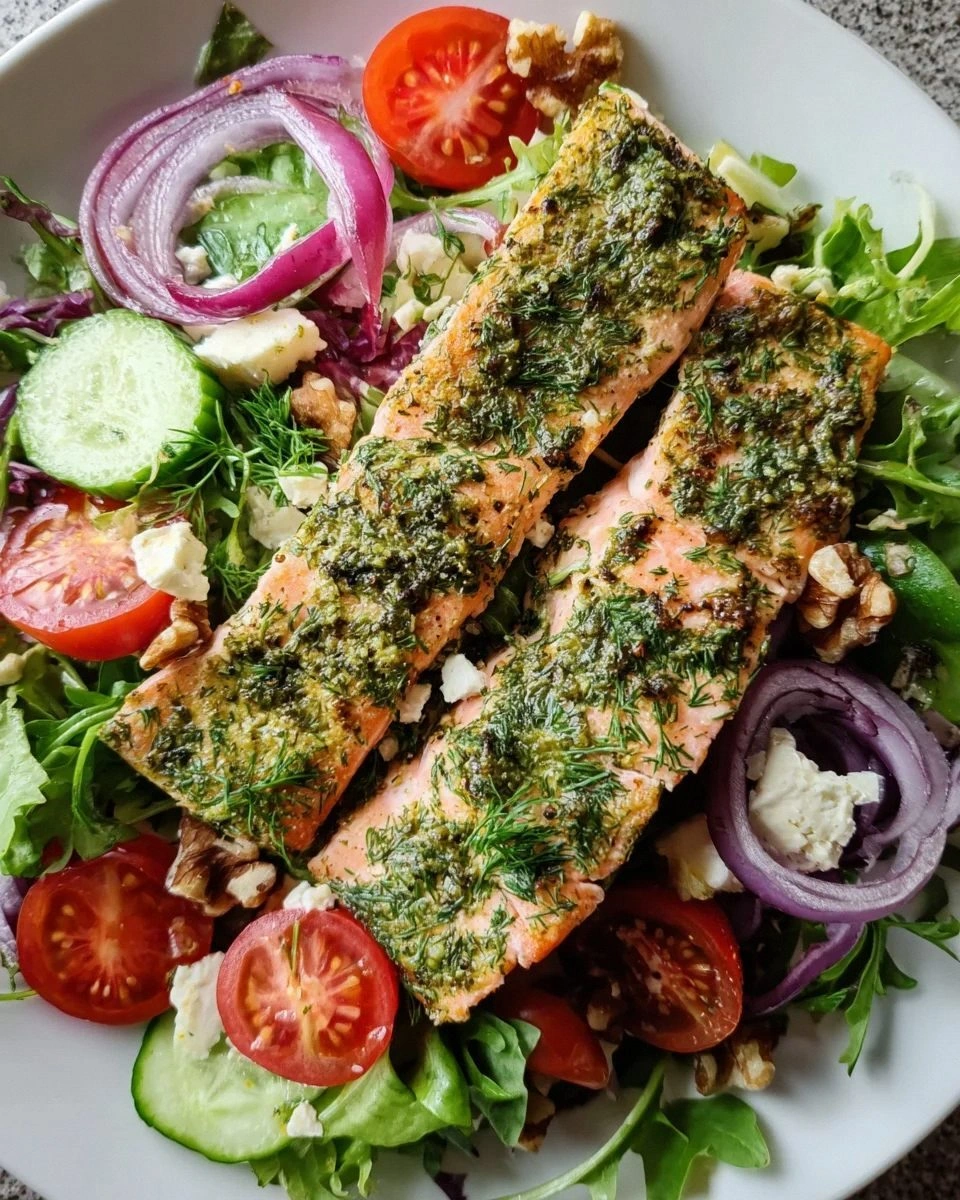
The salad base—mixed greens, cherry tomatoes, cucumber, red onion, avocado, and feta—adds color, texture, and freshness. Each component contributes a distinct bite: the greens provide a crisp canvas, tomatoes add juiciness, cucumber offers cool crunch, onion brings a mild bite, avocado supplies buttery richness, and feta adds salty tang. Skipping any of these will make the salad feel incomplete; however, you can swap feta for goat cheese or omit it for a dairy‑free version.
Everything's prepped? Good. Let's get into the real action...
The Method — Step by Step
-
Start by gathering all your ingredients and laying them out on the counter. This visual inventory helps you stay organized and prevents any mid‑cook panic. Pat the salmon fillets dry with paper towels; the drier they are, the better the crust will stick. Sprinkle each fillet lightly with salt and pepper on both sides, then set them aside for a minute while you prep the herb mixture.
Kitchen Hack: Mix the breadcrumbs, herbs, lemon zest, and a pinch of salt in a shallow dish; this ensures an even coating. -
In a small bowl, combine the panko, chopped parsley, dill, thyme, and lemon zest. Drizzle in the olive oil and toss until the mixture looks lightly moistened but not soggy. The oil acts as a binder, making sure every crumb hugs the fish. Press the herb‑breadcrumb mixture onto the top side of each salmon fillet, forming a compact crust that adheres like a second skin.
-
Heat a large skillet over medium‑high heat and add a splash of olive oil—just enough to coat the bottom. When the oil shimmers, it’s ready; you’ll know because it will ripple like a tiny pond. Place the salmon fillets skin‑side down (if they have skin) and let them sear undisturbed for about 3‑4 minutes. You’ll hear a gentle sizzle, and the edges will start to turn opaque, indicating the heat is penetrating.
Watch Out: If the heat is too high, the crust will burn before the salmon cooks through. -
Flip the fillets carefully using a fish spatula; the crust should be a golden‑brown masterpiece, crisp enough to crackle under a fork. Reduce the heat to medium‑low, then pour in the white wine, letting it sizzle and deglaze the pan. As the wine reduces, it will create a glossy glaze that locks in moisture and adds that subtle acidity we talked about.
-
Cover the pan with a lid and let the salmon finish cooking for another 5‑6 minutes, depending on thickness. The internal temperature should reach 145°F (63°C); you’ll know it’s done when the flesh flakes easily with a fork. While the salmon rests, the residual heat will keep it tender and juicy.
-
Meanwhile, assemble the salad base in a large bowl: toss the mixed greens, halved cherry tomatoes, sliced cucumber, thin red onion rings, diced avocado, and crumbled feta. Drizzle the dressing—lemon juice, extra‑virgin olive oil, Dijon mustard, and a pinch of dried oregano—over the greens and toss gently until everything is lightly coated.
-
Plate the salad on a wide, shallow dish, creating a bed for the salmon. Place each herb‑crusted fillet on top of the greens, letting the juices mingle with the dressing. The contrast of the warm, crisp fish against the cool, crisp salad is where the magic truly happens.
Kitchen Hack: Let the assembled salad sit for two minutes before serving; this allows the flavors to meld. -
Finish with a final flourish: a light sprinkle of extra fresh herbs and a wedge of lemon on the side. The lemon can be squeezed over the top just before eating, adding a burst of brightness that lifts the whole dish. Serve immediately, and watch your guests' faces light up as they discover the perfect harmony of textures and flavors.
That's it — you did it. But hold on, I've got a few more tricks that'll take this to another level...
Insider Tricks for Flawless Results
The Temperature Rule Nobody Follows
Never start with a cold pan; preheat it for at least two minutes so the surface is uniformly hot. This prevents the breadcrumbs from absorbing excess oil and becoming soggy. I once tried to speed things up by turning the heat up high, and the crust turned into a charcoal pancake—lesson learned. Keep the heat at medium‑high for searing, then drop to medium‑low for the finishing stage.
Why Your Nose Knows Best
When the crust starts to turn a deep golden brown and you catch that nutty, toasted aroma, you’re at the perfect moment to flip. Trust your sense of smell more than a timer; ovens and stovetops can be unpredictable. If you wait too long, the crust will become bitter; too soon, and it will fall apart.
The 5‑Minute Rest That Changes Everything
After the salmon finishes cooking, let it rest uncovered for five minutes. This short pause allows the juices to redistribute, preventing a dry bite. It also lets the crust firm up a bit, making it easier to slice without crumbling.
Dress the Salad, Don’t Drown It
When tossing the greens, use just enough dressing to coat each leaf lightly. Over‑dressing makes the salad soggy and masks the delicate flavors of the herbs. A good rule of thumb is one tablespoon of dressing per cup of greens.
Seasoning Layers for Maximum Impact
Season each component individually: salt the salmon, season the breadcrumb mix, and lightly salt the greens. This layered approach ensures every bite is balanced, and no single element overwhelms the others. One friend tried skipping the breadcrumb seasoning and ended up with a bland crust—never again!
Creative Twists and Variations
This recipe is a playground. Here are some of my favorite ways to switch things up:
Spicy Sriracha Glaze
Swap the white wine deglaze for a mixture of sriracha, honey, and a splash of soy sauce. The result is a sweet‑heat coating that pairs beautifully with the cool avocado. Perfect for those who love a little kick.
Asian‑Inspired Sesame Crunch
Replace the panko with toasted sesame seeds and crushed rice crackers. Add a drizzle of sesame oil in the dressing and sprinkle toasted sesame on top. This gives the dish an umami‑rich, nutty profile.
Mediterranean Twist
Use Kalamata olives, sun‑dried tomatoes, and crumbled feta as salad additions. Swap the parsley‑dill mix for oregano and mint, and finish with a splash of red wine vinegar. The flavors become more robust and earthy.
Vegan Version
Swap the salmon for firm tofu or tempeh marinated in soy sauce and lemon. Use a plant‑based breadcrumb and keep the herb crust. The salad stays vibrant, and the protein source changes while still delivering crunch.
Autumn Harvest
Add roasted butternut squash cubes and toasted pumpkin seeds to the salad. Use sage instead of dill for the crust, and finish with a drizzle of maple‑mustard dressing. This variation captures the cozy flavors of fall.
Grilled Citrus Salmon
Instead of pan‑searing, grill the herb‑crusted salmon over medium heat, adding slices of orange and lemon on the grill grates. The citrus smoke infuses the fish with an extra layer of brightness.
Storing and Bringing It Back to Life
Fridge Storage
Place the cooked salmon in an airtight container and store the salad components separately in a zip‑top bag. The salmon stays fresh for up to 3 days, while the greens stay crisp for 2 days if kept dry. When ready to serve, combine and toss with the dressing.
Freezer Friendly
Freeze the herb‑crusted salmon on a parchment sheet, then transfer to a freezer bag. It will keep for up to 2 months. Thaw in the refrigerator overnight, then reheat gently in a skillet with a splash of water to restore the crust’s crunch.
Best Reheating Method
To reheat, preheat a non‑stick pan over medium heat, add a tiny splash of water, and cover for 2‑3 minutes. The steam revives the crust without drying out the fish. Avoid microwaving; it will make the crust soggy and the salmon rubbery.