Picture this: you’re halfway through a week of bland, store‑bought stews, the fridge is a sad gray of leftovers, and your stomach is growling louder than a bass drum at a concert. You stare at the pantry, eyes flicking from one box of canned beans to a lonely bag of barley, and suddenly the idea hits you like a lightning bolt: why not turn that humble grain into a comforting, hearty bowl that feels like a warm hug from an old friend? I tried it, and the result was a stew that sings with depth, a texture that’s both chewy and silky, and a flavor profile so layered it practically does the cooking for itself.
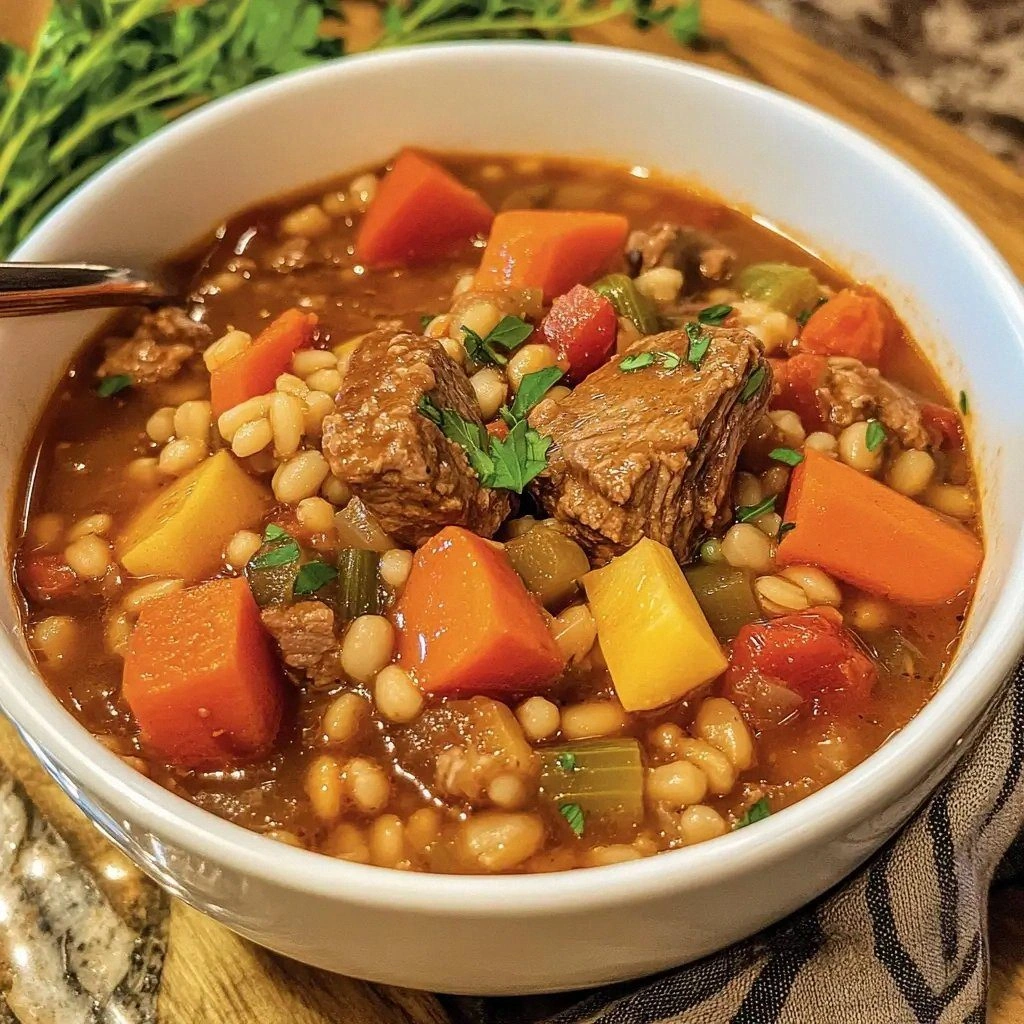
When the first sizzle hit the skillet, the air was thick with the promise of caramelized onions and browned beef. The aroma of garlic roasting in olive oil mingled with the earthy scent of fresh carrots and celery, creating a fragrant prelude that made my mouth water before I even tasted it. I could hear the gentle hiss of the broth as it began to bubble, the sound like a gentle lullaby for the soul. The colors were a kaleidoscope—deep reds from the tomatoes, bright greens from the parsley, and the golden hue of barley peeking through the mix. I could almost feel the comforting weight of the pot, the way it would settle on the stove and keep me company all evening.
What sets this version apart from every other recipe you’ve ever tried is the intentional layering of flavors and the clever use of simple ingredients to create something truly extraordinary. I didn’t just throw everything in; I built a flavor foundation that lets each component shine, from the smoky paprika to the subtle tang of Worcestershire sauce. The barley isn’t just a filler—it’s a textural superstar that absorbs the savory broth and adds a satisfying bite. And the best part? The recipe is so straightforward that even a kitchen novice can pull it off and still end up with a dish that feels gourmet.
There’s a secret twist that most stews miss: a splash of tomato paste and a touch of flour at the end to give the broth a silky, glossy coat, like velvet on a summer night. I dare you to taste this and not go back for seconds. The first spoonful is a burst of umami, the second a comforting hug, and the third—well, you’ll be left craving the rest. By the end, you’ll wonder how you ever made it any other way. Let me walk you through every single step—by the end, you’ll wonder how you ever made it any other way.
What Makes This Version Stand Out
- Flavor Depth: The combination of smoked paprika, thyme, and Worcestershire sauce creates a complex, savory backbone that sets this stew apart from the plain, one‑ingredient broths you find in grocery aisles.
- Texture Play: Pearl barley provides a chewy bite, while the diced carrots and celery offer a gentle crunch that keeps each spoonful exciting.
- Easy Prep: All the chopping happens in under 15 minutes, and the simmering process takes only 30 minutes—perfect for a quick weekday dinner.
- Make‑Ahead Friendly: The stew tastes even better the next day as the flavors meld, making it ideal for meal prepping or a potluck dish.
- Versatile Base: Swap beef for lamb or pork, or go vegetarian with mushrooms and vegetable broth, and the recipe still works like a charm.
- Kid‑Friendly: The gentle spices and hearty vegetables make this stew a hit with picky eaters, turning dinner time into a family favorite.
- Nutritious: Packed with protein, fiber from barley, and essential vitamins from the veggies, it’s a balanced, wholesome meal.
- Budget‑Friendly: Using inexpensive cuts of beef and pantry staples keeps the cost low without sacrificing flavor.
Inside the Ingredient List
The Flavor Base
Onion and garlic are the aromatic backbone of any stew. They’re sautéed until translucent and slightly caramelized, releasing a sweet, savory foundation that carries the rest of the ingredients. Cutting them into uniform pieces ensures even cooking and prevents any one piece from over‑cooking. If you’re short on time, a tablespoon of onion powder and a pinch of garlic powder will do, but the fresh version is worth the extra effort.
The Texture Crew
Pearl barley, carrots, celery, and optional potatoes bring body to the stew. The barley’s chewy bite balances the softness of the cooked veggies, while diced potatoes add a comforting heartiness. Rinsing the barley before cooking removes excess starch and keeps the grains from sticking together. If you’re avoiding gluten, use certified gluten‑free barley or substitute with quinoa.
The Unexpected Star
Tomato paste is the secret sauce that thickens the broth and adds a deep, umami richness. It’s easy to forget, but a couple of tablespoons make the stew feel richer and more cohesive. If you’re on a low‑sodium diet, look for a reduced‑sodium version or simply use less salt overall. This ingredient also gives the stew a subtle sweet undertone that balances the savory notes.
The Final Flourish
Fresh parsley adds a burst of color and a bright, herbal note that cuts through the richness. It’s best added at the very end, right before serving, to preserve its vibrant flavor. A squeeze of lemon juice can also brighten the dish, but use sparingly to avoid overpowering the stew’s depth. A sprinkle of grated Parmesan or a dollop of sour cream can elevate the dish for a more indulgent experience.
Everything’s prepped? Good. Let’s get into the real action.
The Method — Step by Step
- Heat the olive oil in a large Dutch oven over medium‑high heat. Once the oil shimmers, add the beef cubes in a single layer, leaving space between them. Sear each side until a deep brown crust forms; this caramelization locks in flavor and gives the stew a rich color. Don’t stir the beef immediately—let it develop a good sear before turning.
- Reduce the heat to medium, add the diced onion, and sauté until translucent, about 3–4 minutes. Then stir in the minced garlic and cook for another 30 seconds until fragrant—watch out for burning, as garlic can go bitter quickly.
- Return the beef to the pot, sprinkle in smoked paprika, thyme, and a pinch of salt. Stir everything together so the spices coat the meat and vegetables evenly. This step is the moment of truth; the aroma should smell like a cozy, smoky kitchen.
- Pour in the beef broth, diced tomatoes, and Worcestershire sauce. Bring the mixture to a gentle boil, then reduce to a low simmer. Skim off any foam that rises to the surface to keep the broth clear.
- Add the diced carrots, celery, and optional potatoes. Let the stew simmer for 10 minutes, allowing the vegetables to soften while the beef continues to cook.
- Stir in the pearl barley and tomato paste. This is the trickiest step—make sure the barley is fully submerged in the liquid to prevent sticking. Cover the pot, and let it cook on low heat for 25–30 minutes, or until the barley is tender and the beef is fork‑tender. Watch out: if the liquid reduces too much, add a splash of water or broth.
- While the stew simmers, whisk 1 tablespoon of flour with 2 tablespoons of cold water to create a slurry. This will thicken the broth without clumping.
- When the barley is cooked, stir in the flour slurry and a tablespoon of tomato paste. Cook for an additional 5 minutes, stirring constantly, until the stew thickens to your desired consistency.
- Taste the stew and adjust seasoning with salt and pepper. Add a splash of lemon juice if you like a bright finish. Finally, sprinkle chopped parsley over the top and give everything a gentle stir before serving.
- Serve hot, with crusty bread or over a bed of rice if you prefer. The stew’s hearty texture and robust flavors make it a comforting meal for any time of day.
That’s it— you did it. But hold on, I’ve got a few more tricks that’ll take this to another level.
Insider Tricks for Flawless Results
The Temperature Rule Nobody Follows
Cooking the stew on a low, steady simmer rather than a rolling boil preserves the tenderness of the beef and ensures the barley absorbs all the savory juices. If you’re using a pressure cooker, keep the pressure at medium to avoid over‑cooking the grains. I’ve seen stews turn mushy when the heat is too high—don’t let it boil like a volcano.
Why Your Nose Knows Best
Smell the broth as it simmers; a faint, sweet aroma indicates the barley is absorbing the flavors. If it smells more like raw broth, give it a few more minutes. Your nose is a reliable guide—if it feels like a kitchen sunrise, the stew is ready.
The 5‑Minute Rest That Changes Everything
Once you’ve finished cooking, let the stew rest uncovered for five minutes. This allows the flavors to settle and the thickening agents to set. When you stir again, the stew will have a silky consistency that’s easier to ladle.
The Secret Ingredient Swap
Swap out beef broth for chicken or vegetable broth to change the flavor profile. If you’re looking for a richer taste, add a splash of red wine before simmering; it adds depth and a subtle acidity that balances the sweetness of the tomatoes.
The Quick Garnish Trick
Instead of parsley, try a drizzle of truffle oil or a sprinkle of grated Parmesan for an instant upgrade. This simple addition elevates the dish from comforting to gourmet in seconds.
Creative Twists and Variations
Mushroom & Thyme Twist
Swap the beef for sliced portobello mushrooms and add a handful of fresh thyme leaves. The earthy mushrooms give a deep umami flavor, while thyme keeps the stew grounded. This version is perfect for a vegetarian dinner that still feels hearty.
Spicy Chipotle Kick
Add a tablespoon of chipotle in adobo sauce for a smoky heat that pairs well with the barley. The chipotle brings a subtle peppery bite, making the stew a crowd‑pleaser for those who love a little spice.
Coconut Cream Finish
Stir in a splash of coconut milk during the last five minutes for a silky, tropical twist. The coconut cream softens the acidity of the tomatoes and gives the stew a smooth, luscious texture.
Herb‑Infused Barley
Cook the barley in beef broth infused with bay leaves and rosemary before adding it to the stew. The herbs release their flavors into the grains, adding depth and a fragrant aroma that elevates the dish.
Lemon‑Herb Brightness
Finish the stew with a squeeze of fresh lemon juice and a handful of chopped dill. The citrus brightens the flavors, while dill adds a fresh, slightly tangy note that’s refreshing after a rich meal.
Storing and Bringing It Back to Life
Fridge Storage
Cool the stew completely before transferring it to a shallow airtight container. Store in the refrigerator for up to 4 days. The barley will soften slightly, but the stew remains flavorful and hearty.
Freezer Friendly
Divide the stew into individual portions and place in freezer‑proof bags or containers. Label with the date and freeze for up to 3 months. Thaw overnight in the refrigerator before reheating.
Best Reheating Method
Reheat on the stovetop over medium heat, adding a splash of water or broth to loosen the consistency. Stir frequently to prevent sticking. A quick microwave reheat in a microwave‑safe bowl works too, but be sure to stir halfway through.