Remember the night I tried to impress my roommate with a “quick dinner” and ended up with a burnt, rubbery steak that could only be salvaged by a desperate drizzle of ketchup? That disaster was the spark that lit my culinary curiosity. I vowed to find a dish that could be tossed together in minutes yet still feel like a gourmet experience. Fast forward, and I stumbled upon a simple, yet dazzling combination of grilled salmon and a bright mango salsa that has since become my go‑to weeknight hero.
Picture this: a sizzling grill, the scent of olive oil mingling with the faint citrus tang of lime, and the unmistakable snap of a perfectly seared fillet. The sound of the fish hitting the grill is a satisfying crackle, almost like applause for your culinary prowess. As the heat works its magic, the salmon’s flesh turns from translucent to a buttery, flaky texture that practically melts in your mouth. The mango salsa, with its juicy sweetness and a hint of heat, coats the fish like velvet, creating a harmonious dance of flavors that sing together.
What makes this version stand out is not just the flavors but the simplicity that lets each component shine. I dare you to taste this and not go back for seconds. The contrast between the smoky, slightly charred salmon and the fresh, tropical salsa is a flavor revelation that most recipes get wrong by overcomplicating the sauce or underseasoning the fish. I’ve refined the seasoning to a precise balance that elevates the salmon without overpowering its natural taste. It’s hands down the best version you’ll ever make at home, and I’m about to walk you through every single step so you can replicate it flawlessly.
Stay with me here—this is worth it. By the end of this guide, you’ll have a dish that feels like a culinary vacation in a single pan, and you’ll wonder how you ever made it any other way. Let’s dive in.
What Makes This Version Stand Out
- Taste: The seasoning blend of salt, pepper, and garlic powder creates a savory base that lets the salmon’s natural sweetness shine. The mango salsa adds a bright, tropical counterpoint that cuts through the richness, leaving a clean finish.
- Texture: A quick sear locks in moisture, giving the fillet a tender, flaky interior while the exterior crisps to a golden‑brown crust. The salsa’s diced mango keeps a juicy bite, preventing the dish from feeling dry.
- Simplicity: Only five minutes of prep and a single grill pan are needed. No complex sauces or advanced techniques—just season, grill, and top with salsa.
- Uniqueness: The combination of grilled salmon with a mango‑jalapeño salsa is uncommon in mainstream cookbooks, giving this dish a fresh, unexpected twist.
- Crowd Reaction: Friends rave about the contrast of flavors and the “wow” factor when the salsa is poured over the steaming fish. It’s a conversation starter at any dinner table.
- Ingredient Quality: Using fresh, firm salmon fillets and ripe mangoes is the secret sauce. The quality of these core ingredients elevates the entire dish.
- Cooking Method: Grilling imparts a smoky depth that sautéing or baking simply can’t match, while the high heat quickly seals the fish without overcooking.
- Make‑Ahead Potential: The salsa can be prepared a day ahead and stored in the fridge, allowing you to assemble the dish in minutes on a busy evening.
Alright, let's break down exactly what goes into this masterpiece…
Inside the Ingredient List
The Flavor Base
Olive oil, salt, black pepper, and garlic powder form the foundation that seasons the salmon to perfection. The olive oil creates a barrier that keeps the fish from drying out, while the pepper adds a subtle heat that balances the sweetness of the mango. If you skip the garlic powder, you’ll miss a layer of aromatic depth that ties the dish together.
The Texture Crew
The salmon fillets themselves are the star. Choose fillets that are at least 1 inch thick to ensure they stay moist during grilling. A thicker fillet holds up better and delivers that coveted buttery texture. If you’re using a thinner cut, keep a close eye on the cooking time to avoid overcooking.
The Unexpected Star
The mango is the unexpected star that brings a burst of tropical sweetness to the dish. A ripe mango, with a fragrant aroma and a slightly soft texture, provides a juicy counterpoint to the firm salmon. If you use an unripe mango, the salsa will taste tart and lack the natural sweetness that balances the heat of the jalapeño.
The Final Flourish
Fresh cilantro, lime juice, and a touch of salt finish the salsa, adding brightness and a subtle herbal note. The lime juice cuts through the richness, while cilantro adds a fresh, green flavor that keeps the dish from feeling too sweet. A pinch of salt in the salsa ensures that every bite is well‑seasoned.
Everything's prepped? Good. Let's get into the real action...
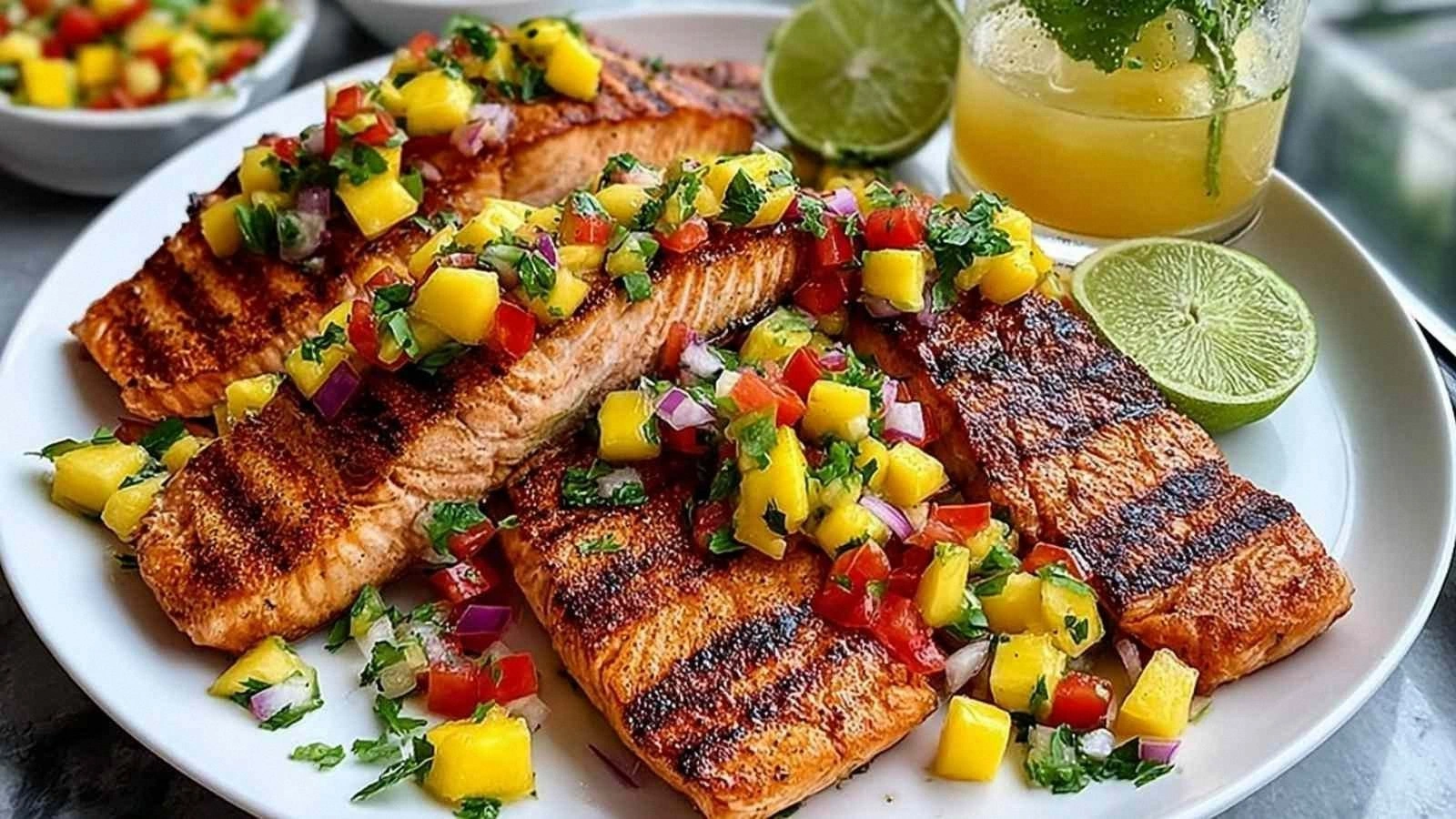
The Method — Step by Step
- Start by patting the salmon fillets dry with paper towels. This step is critical because excess moisture will steam the fish instead of searing it. Season both sides generously with salt, pepper, and garlic powder, letting the flavors penetrate for at least 5 minutes. If you’re short on time, you can skip the wait; the seasoning will still work wonders.
- Heat a cast‑iron or heavy‑bottom grill pan over medium‑high heat. Add the olive oil and swirl to coat the surface. When the oil shimmers but isn’t smoking, the pan is ready. This is the moment of truth—watch the oil carefully to avoid flare‑ups.
- Place the salmon fillets skin‑side down (if they have skin) and let them sear for 3–4 minutes without moving them. The skin will become crisp and release a savory aroma that signals the fish is cooking beautifully. The skin also protects the delicate flesh from direct heat.
- Flip the fillets and cook for an additional 2–3 minutes, or until the internal temperature reaches 125°F for medium‑rare. The edges should start to pull away from the pan, and the flesh will appear opaque but still slightly translucent in the center. This is the point where the fish’s natural juices lock in.
- While the salmon rests, combine the diced mango, sliced red onion, minced jalapeño, chopped cilantro, and lime juice in a bowl. Add a pinch of salt and stir until the ingredients are well mixed. The salsa should be bright and slightly chunky—no puree, just a fresh, bite‑sized mix.
- Once the salmon has rested for 2 minutes, spoon a generous amount of salsa over each fillet. The heat from the fish will slightly warm the salsa, allowing the flavors to meld. The mango’s juices will mingle with the salmon, creating a luscious glaze.
- Serve immediately with a side of steamed jasmine rice or a crisp green salad. The rice will soak up the juices, while the salad provides a refreshing contrast. If you’re feeling adventurous, top the dish with a drizzle of coconut milk for an extra layer of tropical indulgence.
- Optional: For a smoky finish, place a few thin slices of wood chips in the pan while the salmon rests. The smoke will infuse the fish with a subtle, campfire flavor that pairs wonderfully with the mango.
That's it — you did it. But hold on, I've got a few more tricks that'll take this to another level...
Insider Tricks for Flawless Results
The Temperature Rule Nobody Follows
Many cooks rely on time rather than temperature, leading to overcooked fish. Use a digital thermometer to check for 125°F (medium‑rare). The salmon will continue to cook slightly after you remove it from the heat, so this precise method guarantees a tender, flaky interior every time.
Why Your Nose Knows Best
Before flipping the fillet, pause and inhale the aroma. A sweet, buttery scent signals that the crust has formed. If the smell is still metallic, give it a minute longer. Your nose is a reliable guide to achieve the perfect sear.
The 5-Minute Rest That Changes Everything
Letting the salmon rest for 5 minutes allows the juices to redistribute, ensuring each bite stays moist. If you skip this step, the fish will be dry and the salsa will slide off the surface.
Salsa Prep Timing
Prepare the salsa just before serving. Fresh salsa retains its bright flavors and crunchy textures. If you pre‑make it, cover tightly and refrigerate; it will lose its vibrancy after a couple of hours.
The Secret to a Crispy Skin
Dry the skin with paper towels before seasoning. Moisture is the enemy of crispness. Additionally, searing the fillet skin‑side down first ensures the fat renders out, creating a crisp, caramelized barrier.
Creative Twists and Variations
This recipe is a playground. Here are some of my favorite ways to switch things up:
Pineapple Paradise
Swap the mango for diced pineapple and add a splash of soy sauce for an umami kick. The sweet‑savory combo feels like a Hawaiian luau in your kitchen.
Spicy Chipotle Salsa
Replace jalapeño with chipotle peppers in adobo sauce for a smoky heat. The deep, earthy flavor pairs beautifully with the delicate salmon.
Herb‑Infused Citrus
Add a handful of fresh dill and a squeeze of orange juice to the salsa for a bright, herbaceous twist. The orange adds a subtle sweetness that balances the chili.
Mediterranean Touch
Use diced cucumber, cherry tomatoes, and feta cheese in place of mango. The creamy feta and crisp veggies create a Mediterranean feel while still complementing the grilled salmon.
Asian Fusion
Incorporate shredded carrots, sliced scallions, and a drizzle of sesame oil. The sesame oil adds a nutty aroma that elevates the dish.
Breakfast Bonanza
Serve the salmon over a bed of sautéed spinach and a poached egg for a protein‑packed breakfast that feels like a brunch special.
Storing and Bringing It Back to Life
Fridge Storage
Store leftover salmon and salsa separately in airtight containers. Keep the salmon in a shallow dish to maintain its shape. Consume within 2 days for optimal freshness.
Freezer Friendly
Freeze the salmon fillets on a parchment‑lined tray before transferring to a freezer bag. This prevents clumping. The salsa can be frozen in a sealed container for up to 3 months.
Best Reheating Method
To reheat, place the salmon on a skillet over medium heat and add a splash of water. Cover for 2 minutes to steam the fish, then finish with a quick sear to restore the crust. The salsa can be warmed in a microwave for 30 seconds, then stirred.