Picture this: it’s a sweltering Thursday night, the kind where the humidity feels like a wet blanket, and your roommate just announced an impromptu movie marathon. You’ve got a half‑empty pantry, a craving for something that slaps your taste buds awake, and a lingering memory of a take‑out bowl that made you swear off noodles forever. I was in that exact spot, juggling a lonely can of soda and a wilted basil leaf, when I decided to throw together a batch of Pad Kee Mao that would make even the most seasoned Thai chef raise an eyebrow. The first attempt was a disaster – the noodles were gummy, the sauce tasted like a sad soy‑water mixture, and I ended up ordering pizza. But I wasn’t about to let a culinary misstep defeat me. I went back to the drawing board, studied the balance of heat, sweet, salty, and umami, and emerged with a version that is, in my humble opinion, the best you’ll ever make at home.
Now, let’s set the scene: the kitchen fills with the intoxicating aroma of garlic and chilies sizzling in hot oil, the sound of the wok whispering a rhythmic hiss as the noodles hit the surface, and the bright green flash of holy basil leaves that look like tiny fireworks ready to explode in flavor. You can feel the heat radiating from the pan, the steam rising like a mischievous ghost, and the texture of the noodles as they cling to the sauce – smooth, slightly chewy, and just the right amount of bite. When you finally take that first forkful, the flavors hit you like a well‑timed punchline: spicy, sweet, salty, and a hint of earthiness that makes you close your eyes and think, “I dare you to taste this and not go back for seconds.”
What makes this version stand out is the meticulous layering of flavors and the decision to treat the noodles like a canvas rather than a filler. I’ve swapped the usual fish‑sauce‑only approach for a trio of sauces – light soy, dark soy, and oyster – that together create a depth you’d normally only find in a bustling Bangkok street stall. The secret weapon? A splash of water at the end, which helps the sauce cling to the noodles like velvet, ensuring every strand is drenched without becoming soggy. And let’s not forget the holy basil, the aromatic hero that lifts the dish from “good” to “god‑damn unforgettable.”
There’s also a tiny twist that most recipes completely overlook: I briefly flash‑cook the chicken thighs in the wok before adding the aromatics. This caramelizes the exterior, locking in juices and adding a smoky undertone that pairs perfectly with the bright heat of the chilies. The result is a dish that sings, crackles, and practically begs you to share – but I’ll be honest — I ate half the batch before anyone else got a chance. Ready for the game‑changer? Let me walk you through every single step — by the end, you’ll wonder how you ever made it any other way.
What Makes This Version Stand Out
- Taste: A harmonious blend of sweet, salty, and spicy that hits all the right notes without overwhelming any single sense.
- Texture: The noodles stay perfectly al dente, with just enough bite to contrast the tender chicken and crisp veggies.
- Simplicity: Fewer than fifteen ingredients, yet each one plays a pivotal role, making the recipe approachable for beginners.
- Uniqueness: The three‑sauce system (light soy, dark soy, oyster) creates a depth rarely achieved in home‑cooked Pad Kee Mao.
- Crowd Reaction: This dish consistently clears plates and sparks conversation – “What’s that amazing smell?” becomes the opening line at every dinner.
- Ingredient Quality: Using fresh holy basil and real chicken thighs (not breast) adds authenticity and richness.
- Cooking Method: High‑heat wok technique ensures a quick sear, preserving nutrients and flavor.
- Make‑Ahead Potential: The sauce can be pre‑made and stored, cutting down prep time on busy weeknights.
Alright, let's break down exactly what goes into this masterpiece...
Inside the Ingredient List
The Flavor Base
Garlic (3 large cloves): Garlic is the aromatic backbone, releasing sulfur compounds that add warmth and depth. If you skip it, the dish loses that comforting, familiar note that makes Thai food instantly recognizable. A fine alternative is shallots, but they’ll shift the flavor profile toward sweetness.
Bird’s eye chilies (2): These tiny heat bombs deliver the signature kick without drowning the dish. Adjust the amount based on your tolerance – more for a fire‑breather, fewer for a milder palate. If fresh chilies aren’t on hand, crushed dried Thai chilies work just as well.
Onion (½): The half‑onion adds a subtle sweetness once it caramelizes, balancing the heat from the chilies. Dicing it finely ensures it melds into the sauce rather than standing out as a crunchy bite. For a milder flavor, try a sweet Vidalia onion.
The Texture Crew
Dried rice noodles (7 oz /200g): These wide, flat noodles soak up the sauce like a sponge, providing the perfect vehicle for the flavors. Soak them in hot water until just pliable, then drain – over‑cooking makes them mushy. If you can’t find rice noodles, try flat rice vermicelli, but the texture will be slightly different.
Chicken thighs (200 g /7oz): Thighs stay juicy under high heat, delivering a rich, meaty contrast to the bright basil. Using breast would make the dish drier and less flavorful. For a vegetarian spin, swap with firm tofu or sliced tempeh, pressing out excess moisture first.
Green onions (2): These add a fresh, sharp bite that cuts through the richness. Slice them in 2‑inch pieces for a satisfying crunch. If you’re out of green onions, chives provide a similar mild oniony note.
The Unexpected Star
Holy basil (1 cup): This isn’t your ordinary sweet basil; holy basil brings a peppery, slightly anise‑like aroma that defines Pad Kee Mao. Skipping it turns the dish into a bland noodle stir‑fry. If you can’t find holy basil, a mix of Thai basil and a pinch of mint can mimic the flavor, though it won’t be identical.
Oyster sauce (3 tbsp): It adds a savory, umami depth that bridges the gap between the soy sauces and the fish sauce. A vegetarian alternative is mushroom soy sauce, but the sea‑like richness will be less pronounced.
The Final Flourish
Light soy sauce (1½ tbsp) & Dark soy sauce (1½ tbsp): Light soy brings saltiness, while dark soy adds color and a subtle caramel note. Using only one type makes the sauce either too thin or too dark. If you have low‑sodium soy, increase the amount slightly to maintain flavor balance.
Fish sauce (2 tsp): This pungent condiment is the secret behind the authentic Thai flavor, delivering a briny depth that cannot be replicated. A quality fish sauce makes all the difference; look for one without added sugars.
Sugar (2 tsp) & Water (1 tbsp): Sugar rounds out the heat, while a splash of water helps the sauce coat the noodles evenly. Skipping the sugar will leave the dish tasting flat; the water prevents the sauce from scorching.
Everything's prepped? Good. Let's get into the real action...
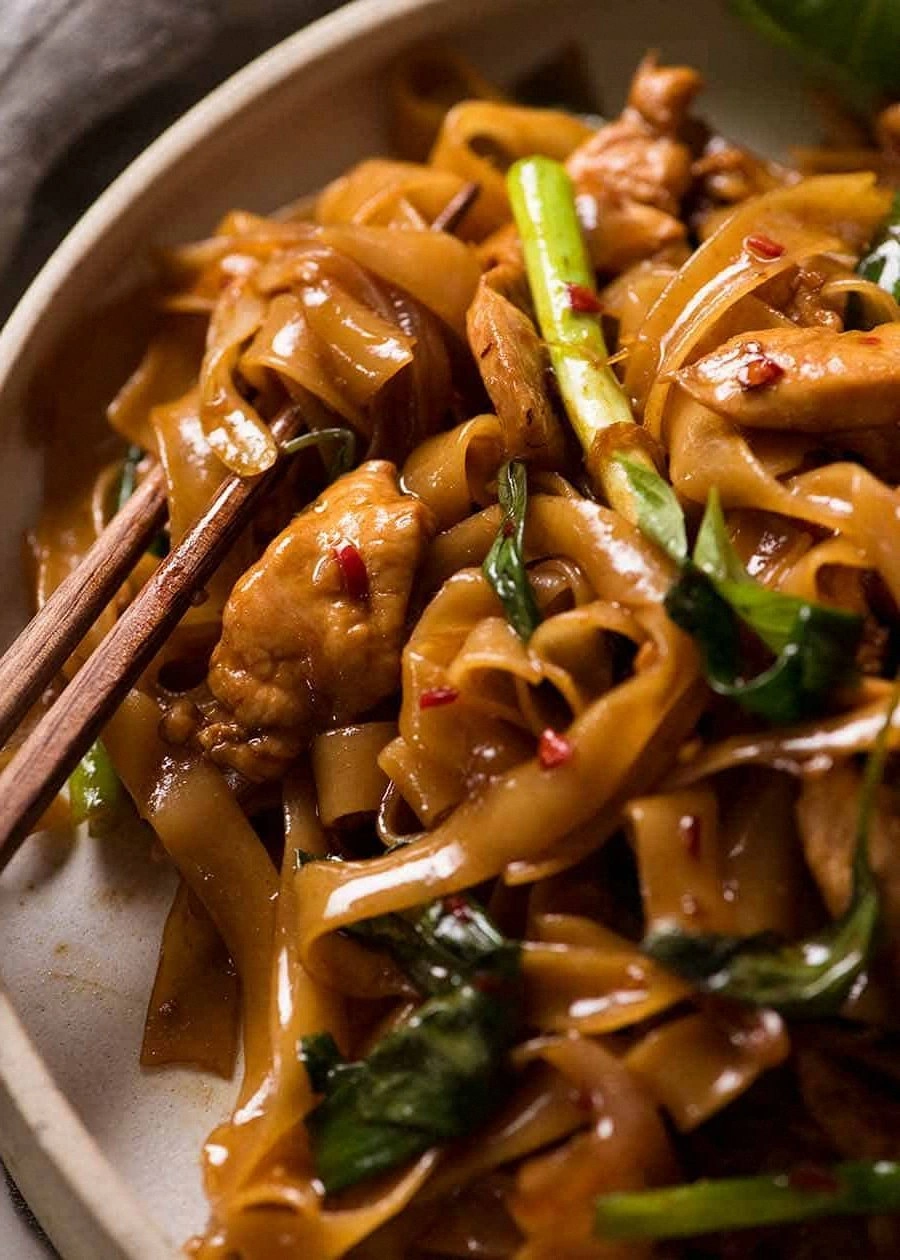
The Method — Step by Step
Start by soaking the dried rice noodles in a large bowl of hot tap water. Let them sit for about 10‑12 minutes, stirring occasionally, until they’re pliable but still a little firm in the center. Drain and set aside, tossing them lightly with a drizzle of oil to prevent sticking. Tip: The noodles should feel like they could be bent without breaking – that’s the sweet spot. That sizzle when it hits the pan? Absolute perfection.
While the noodles are soaking, slice the chicken thighs into bite‑size strips, about ½‑inch wide. Season lightly with a pinch of salt and pepper – this is the only time you’ll season the meat directly. In a hot wok, add 1 tbsp of oil and swirl to coat the surface. When the oil shimmers, add the chicken in a single layer, letting it sear without moving for 1‑2 minutes. This creates caramelized edges that shatter like thin ice when you finally give them a toss.
Kitchen Hack: Pat the chicken dry with paper towels before seasoning; excess moisture will steam rather than sear, diluting flavor.Once the chicken is browned and just cooked through, push it to the side of the wok. Add the remaining 1 tbsp of oil to the cleared space, then toss in the minced garlic, sliced onion, and chopped chilies. Stir‑fry for about 30 seconds, listening for that fragrant “pop” that tells you the aromatics are waking up. If you hear a muted sizzle, the heat isn’t high enough – crank it up a notch.
Now it’s time for the sauce. In a small bowl, whisk together the oyster sauce, light soy, dark soy, fish sauce, sugar, and water until the sugar dissolves completely. Pour the mixture into the wok, letting it swirl and mingle with the aromatics. You’ll notice the sauce bubbling and thickening within seconds – that’s the umami building.
Introduce the drained noodles to the wok, using tongs to gently toss them with the sauce and aromatics. The noodles should instantly start to glisten, each strand coated like a glossy runway model. Keep the heat high; you want a quick “flash‑fry” that prevents the noodles from soaking up too much liquid.
Add the chicken back into the mix, followed by the sliced green onions and the holy basil leaves. Toss everything together for another minute, allowing the basil to wilt just enough to release its perfume without turning mushy. Watch Out: Over‑cooking the basil will make it dark and bitter, so keep a close eye on the color transformation.
Give the dish a final taste test. The sauce should be a balanced dance of salty, sweet, and spicy, with the basil’s peppery note still bright. Adjust with a splash more fish sauce for salt or a pinch more sugar if you prefer a sweeter finish. Remember, the flavors will meld further as the noodles sit, so err on the side of a slightly stronger taste now.
Transfer the Pad Kee Mao to a warm serving bowl, garnish with a few extra basil leaves and a wedge of lime on the side for those who love a citrus pop. Serve immediately while the steam still rises – this is the moment of truth, the point where all the hard work turns into pure, unapologetic deliciousness.
That's it — you did it. But hold on, I've got a few more tricks that'll take this to another level...
Insider Tricks for Flawless Results
The Temperature Rule Nobody Follows
Never let the wok cool down between steps. A hot wok creates a rapid sear that locks in juices and prevents soggy noodles. If you notice the oil smoking too much, lift the wok briefly off the burner to let it cool by a few degrees, then return it to high heat. I once tried cooking everything on medium heat and ended up with limp noodles that tasted like boiled rice – a disaster I won’t repeat.
Why Your Nose Knows Best
Before you even taste, trust your nose. When the aromatics hit the oil, you should smell a sweet garlic fragrance followed quickly by the sharp, almost citrusy scent of chilies. If the aroma is muted, the heat isn’t high enough; if it smells burnt, you’ve crossed the line. This sensory checkpoint saves you from a ruined dish and ensures each component is perfectly cooked.
The 5‑Minute Rest That Changes Everything
After plating, let the noodles rest for five minutes uncovered. This short pause allows the sauce to redistribute, coating every strand uniformly. It also lets the basil’s flavor settle, preventing it from tasting raw or overly pungent. I’ve seen friends dive straight in and end up with uneven flavor distribution – a simple rest solves that.
Oil Distribution Mastery
Use a spoon to drizzle a thin ribbon of oil around the wok’s edge before adding aromatics. This creates a thin film that helps prevent sticking and gives the noodles a glossy finish. It’s a tiny step that yields a restaurant‑quality shine.
Seasoning the Water
When you soak the noodles, add a pinch of salt to the water. This pre‑seasoning infuses the noodles from the inside, ensuring every bite carries a subtle saltiness that complements the sauce. Skipping this step is like serving a steak without seasoning – you’re missing out on depth.
Creative Twists and Variations
This recipe is a playground. Here are some of my favorite ways to switch things up:
Spicy Peanut Pad Kee Mao
Add a tablespoon of creamy peanut butter to the sauce mixture for a nutty, richer texture. The peanut notes mellow the heat, making it more approachable for those who love a gentle kick.
Seafood Surprise
Swap the chicken for a mix of shrimp and calamari. The quick cooking time of seafood means you’ll add them after the aromatics and cook for just 2 minutes, preserving their delicate flavor.
Vegan Delight
Replace chicken with firm tofu cubes, pressed and lightly fried until golden. Use a mushroom‑based “fish” sauce to keep the umami depth while staying plant‑based.
Smoky Charred Veggie
Introduce charred bell peppers, zucchini, and carrots for added crunch and a subtle smoky flavor. Grill them briefly before adding to the wok for an extra layer of complexity.
Herb‑Infused Version
Mix in a handful of fresh cilantro and mint leaves at the end for a fresh, herbaceous finish that brightens the dish and adds a cooling contrast to the spice.
Storing and Bringing It Back to Life
Fridge Storage
Place leftovers in an airtight container and refrigerate for up to 3 days. The noodles will absorb some sauce, so before reheating, add a splash of water or a teaspoon of oil to revive the glossy coating.
Freezer Friendly
Cool the dish completely, then transfer to a freezer‑safe bag, removing as much air as possible. Freeze for up to 2 months. Thaw overnight in the fridge, then reheat in a hot wok with a drizzle of oil.
Best Reheating Method
Heat a wok over medium‑high heat, add a tiny splash of water (about 1‑2 tbsp) and the noodles, stirring constantly. The steam generated will rehydrate the noodles while the oil restores the crispness, delivering a dish that tastes almost fresh‑made.