If you’ve ever struggled with a soggy, unevenly cooked quesadilla, you’re not alone. I’ve seen countless attempts that end in a sad, greasy mess. The difference here is that every element is carefully calibrated: the eggs are beaten just enough to hold together, the cheese is chosen for its meltability, and the tortillas are warmed to the perfect temperature. I’ll show you how to avoid the common pitfalls, how to make the process quick, and how to elevate this humble breakfast staple into a showstopper that will impress even the most discerning palates. Let’s dive in.
What Makes This Version Stand Out
- Flavor: The combination of creamy eggs, sharp cheddar, and sweet bell peppers creates a layered taste that satisfies every craving.
- Texture: Crisp edges meet a silky interior, thanks to the precise timing of the heat and the use of butter for a golden crust.
- Speed: The entire process takes under 30 minutes, making it a perfect breakfast or quick dinner option.
- Simplicity: Only a handful of ingredients, no fancy sauces or exotic spices.
- Crowd Appeal: Ideal for families, college roommates, or a quick date night – everyone loves a gooey, cheesy quesadilla.
- Ingredient Quality: Using fresh, high‑quality eggs and real cheese makes the difference between ordinary and unforgettable.
- Methodology: The folding technique and pan selection are optimized for even cooking and maximum flavor.
- Make‑Ahead: The quesadilla can be assembled ahead of time and reheated without losing its crispness.
Inside the Ingredient List
The Flavor Base
The eggs are the heart of this dish. They provide a rich, protein‑packed foundation that binds everything together. Beating the eggs until the whites and yolks are fully blended ensures a smooth, homogeneous mixture that cooks evenly. Skipping this step will result in a patchy, unevenly cooked interior that feels more like a scramble than a cohesive filling.
Onions add a savory sweetness that caramelizes beautifully when sautéed in butter. The key is to slice them thinly so they soften quickly without burning. If you prefer a milder flavor, use red onion instead of white; the color will also add a pop of visual appeal.
Bell peppers bring a bright, sweet crunch that contrasts wonderfully with the creamy eggs. I always use a mix of red, yellow, and green to create a rainbow of colors that makes the quesadilla look as good as it tastes. If you’re short on time, frozen diced peppers work fine, but fresh will give you a fresher bite.
The Texture Crew
Cheese is the star of the show. I use a blend of Monterey Jack and sharp cheddar for their meltability and sharp flavor. The cheese creates that gooey, molten core that makes the quesadilla irresistible. If you’re vegan, a plant‑based cheese that melts well will do the trick, but the texture won’t be identical.
Tortillas are the canvas. Choosing a high‑quality flour tortilla that’s pliable yet sturdy is essential. If you use a corn tortilla, the flavor profile changes slightly, but the technique remains the same. The tortilla’s thickness should allow it to hold the filling without tearing.
Butter is used to sauté the onions and peppers, but it also creates a golden crust on the tortilla. The butter’s fat content helps achieve a crisp, caramelized edge. If you’re dairy‑free, use a neutral oil like grapeseed or avocado for a similar effect.
The Unexpected Star
Cilantro adds a fresh, herbal note that cuts through the richness of the eggs and cheese. It’s a subtle but essential finishing touch that elevates the dish from simple to memorable. If you’re not a fan of cilantro, a sprinkle of fresh parsley or a dash of lime juice will provide a comparable brightness.
The Final Flourish
Salsa is the final flourish that brings a burst of acidity and heat. A mild salsa balances the richness, while a hotter variety adds a kick that keeps the dish from feeling too heavy. I prefer a chunky salsa with diced tomatoes and onions, but any variety will work.
Everything’s prepped? Good. Let’s get into the real action.
The Method — Step by Step
- Heat a large non‑stick skillet over medium heat. Add a tablespoon of butter and let it melt until foamy, but not browned. The butter should coat the pan evenly; this creates a non‑stick surface and a subtle, nutty aroma that signals the pan is ready.
- Add the diced onions to the skillet and sauté for 2–3 minutes, or until they start to soften and become translucent. Stir occasionally to prevent sticking. The onions should release their natural sweetness without turning into caramel.
- Introduce the diced bell peppers, cooking for an additional 2 minutes. The peppers should soften slightly but retain a hint of crunch. This step adds a bright, sweet flavor that balances the richness of the eggs.
- In a medium bowl, whisk the eggs until the whites and yolks are fully blended. Add a pinch of salt and a dash of black pepper. Pour the eggs into the skillet, stirring gently to combine with the vegetables. Cook until the eggs begin to set but are still slightly runny, about 1–2 minutes.
- Sprinkle the shredded cheese over the egg mixture. The cheese should melt quickly, forming a gooey layer that binds the filling together. Let the cheese melt for 30 seconds before moving on.
- Place a flour tortilla flat on a clean surface. Spoon a generous amount of the egg‑cheese mixture onto the center of the tortilla, leaving a 1‑inch border around the edges. This ensures the filling doesn’t spill over when folded.
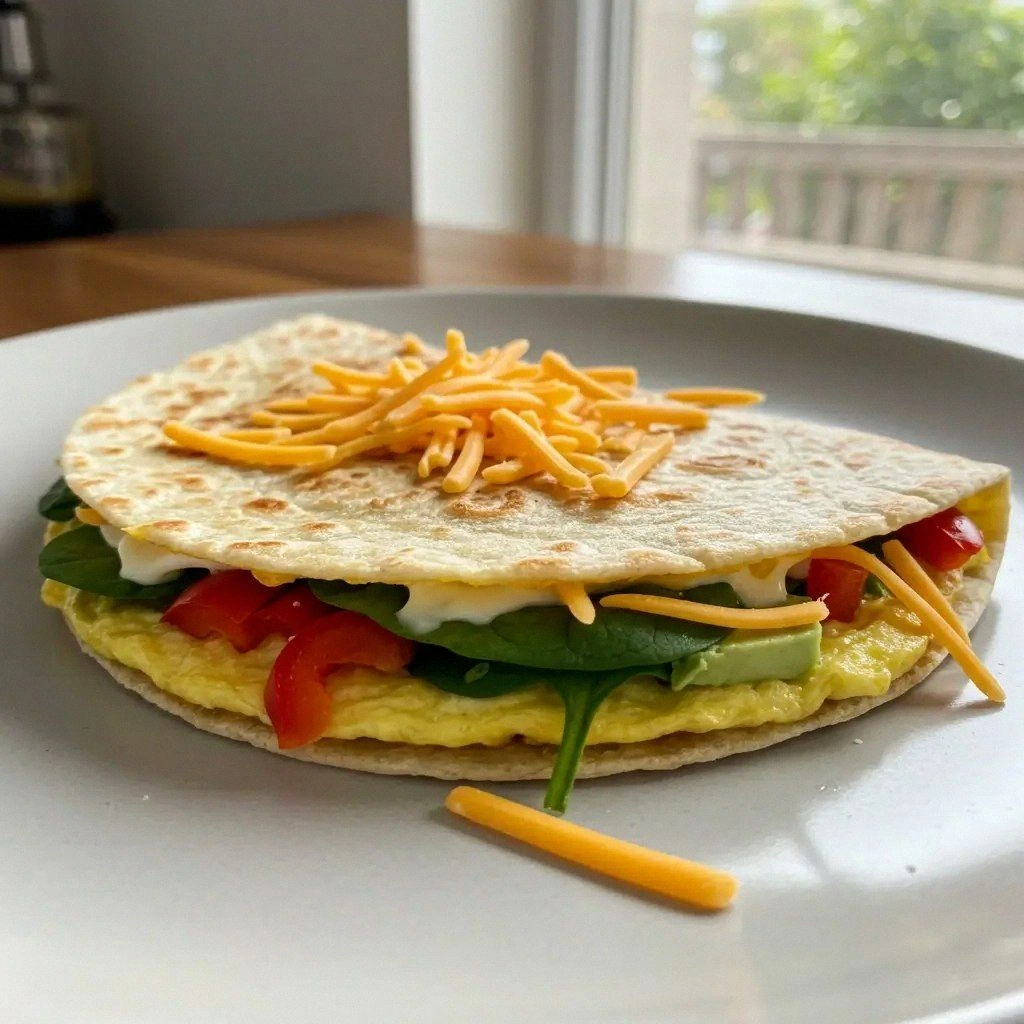
- Fold the tortilla in half, pressing gently to seal the edges. Place the folded quesadilla seam‑side down in the skillet. Cook for 3–4 minutes, or until the bottom is golden brown and crisp. Use a spatula to press down slightly, encouraging even contact with the pan.
- Flip the quesadilla carefully, pressing again to ensure even browning on the other side. Cook for another 2–3 minutes, until the cheese inside is fully melted and the tortilla is evenly crisp. The edges should feel firm and slightly blistered.
- Remove the quesadilla from the skillet and let it rest for 30 seconds. This short rest allows the filling to set, preventing the cheese from oozing out when sliced.
- Slice the quesadilla into wedges, sprinkle with fresh cilantro, and serve with a side of salsa. The salsa’s acidity cuts through the richness, and the cilantro adds a fresh, herbal finish.
That’s it — you did it. But hold on, I’ve got a few more tricks that will take this to another level.
Insider Tricks for Flawless Results
The Temperature Rule Nobody Follows
Many cooks start with a high heat, hoping to get a quick crisp. The truth is, medium heat gives you the best control. A skillet that’s too hot will scorch the tortilla while leaving the filling raw. I’ve seen friends burn their quesadillas, only to salvage them by lowering the heat and cooking longer. Keep the skillet at medium, and you’ll get that perfect golden crust every time.
Why Your Nose Knows Best
The aroma is a reliable indicator of doneness. When the tortilla starts to smell toasted, the edges will begin to pull away from the pan. This subtle cue tells you that it’s time to flip. Trust your nose, and you’ll avoid the dreaded “burnt on the outside, raw on the inside” scenario.
The 5‑Minute Rest That Changes Everything
Letting the quesadilla rest for 30 seconds to 1 minute after cooking is essential. During this short pause, the cheese sets into a smooth, cohesive layer that won’t ooze out of the edges when you cut. I once skipped this step, and the result was a gooey mess that made cutting a challenge. The rest is a simple but powerful technique.
Use a Butter‑Scented Oil for Extra Flavor
If you’re not a fan of butter, try using a neutral oil with a buttery aroma, like clarified butter or a light olive oil. The oil will still provide the crispness, and the subtle buttery scent will enhance the overall flavor profile. This tweak keeps the dish approachable for those who prefer a lighter, dairy‑free option.
Add a Splash of Milk or Cream
A tablespoon of milk or cream added to the eggs before cooking creates a silkier texture. The liquid helps the eggs bind better, producing a more cohesive filling that melts smoothly. It’s a simple adjustment that elevates the dish from good to great.
Creative Twists and Variations
This recipe is a playground. Here are some of my favorite ways to switch things up:
Spicy Chipotle Version
Swap regular salsa for chipotle salsa and add a pinch of smoked paprika to the eggs. The smoky heat complements the cheese, creating a bold flavor that’s perfect for a brunch with friends. The chipotle’s mild heat keeps the dish approachable while adding depth.
Mediterranean Delight
Replace cheddar with feta and add chopped kalamata olives, diced tomatoes, and a sprinkle of oregano. The briny olives and tangy feta give the quesadilla a Mediterranean twist that feels fresh and light. Serve with a side of tzatziki for a complete meal.
Vegan Dream
Use a vegan egg substitute or tofu scramble, vegan cheese, and a plant‑based butter. The texture remains creamy, and the flavor profile stays comforting. This version is ideal for those looking to keep the dish plant‑based without compromising on taste.
Breakfast Burrito Style
Add sautéed potatoes, bacon, or sausage to the filling before folding. The extra protein and hearty ingredients turn the quesadilla into a filling breakfast burrito. Top with avocado slices for a creamy finish.
Sweet & Savory Fusion
Incorporate diced apples and a pinch of cinnamon into the egg mixture. The subtle sweetness balances the savory cheese, creating a unique flavor that’s surprisingly delightful. Pair with a drizzle of honey for an extra touch.
Storing and Bringing It Back to Life
Fridge Storage
Cool the quesadilla to room temperature, then wrap it tightly in foil or plastic wrap. Store in the refrigerator for up to 2 days. The foil keeps the tortilla from drying out and preserves the crispness.
Freezer Friendly
Wrap each quesadilla individually in foil, then place them in a freezer bag. Freeze for up to 3 months. When ready to eat, thaw overnight in the refrigerator or use the microwave’s defrost setting for 1–2 minutes.
Best Reheating Method
Reheat in a skillet over medium heat for 2–3 minutes per side, or until the tortilla is crispy again. If the filling seems dry, add a splash of water or a tiny pat of butter to the pan to create steam and keep it moist. The result is a fresh, hot quesadilla that tastes almost brand‑new.