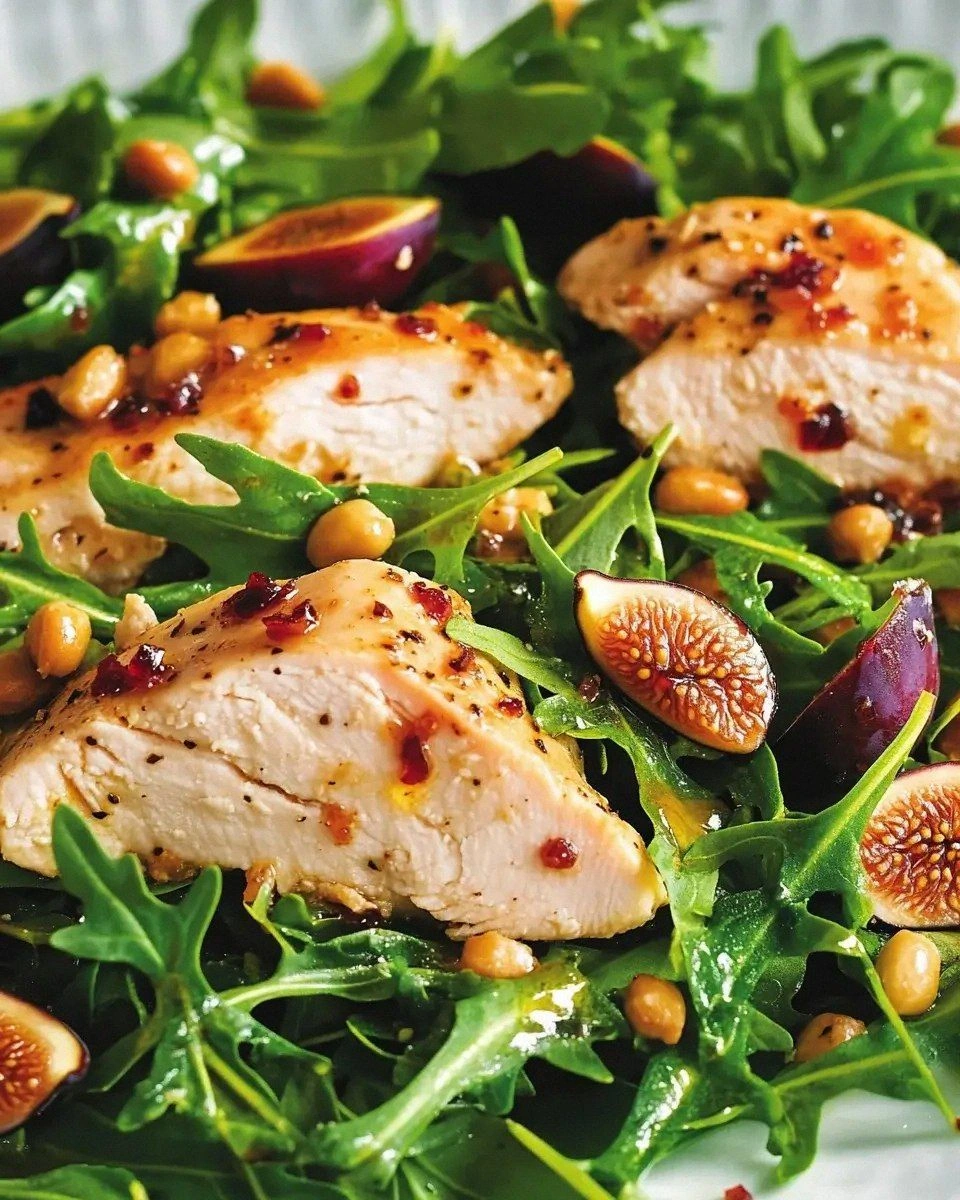
Okay, picture this: I’m standing in my kitchen, a half‑finished lasagna cooling on the counter, a rogue smoke alarm wailing like a distressed opera singer, and a sudden craving for something that feels both light and luxurious. I tossed a bag of arugula into the sink, opened the fridge, and stared at a lonely slab of chicken breast that had been waiting for a purpose. That moment of chaos sparked a dare from my roommate—“Make something that will make me forget the lasagna disaster.” I accepted, and what emerged was a salad so bold it practically shouts, “I’m the hero of your dinner table.”
The first thing that hits you is the aroma: the sweet, caramelized scent of figs mingling with the smoky whisper of seared chicken, all wrapped in a fragrant veil of olive oil and balsamic reduction. You can almost see the glossy, amber‑brown drizzle pooling in the bowl, catching the light like liquid amber. The arugula itself crackles under your fingertips, peppery and fresh, a perfect counterpoint to the buttery softness of the figs. When you bite, the warm dressing kisses the leaves, the chicken offers a juicy, tender bite, and the figs explode with a honeyed burst that makes your taste buds do a little happy dance.
Why does this version stand out from the sea of chicken‑arugula salads you’ve seen on Pinterest? Most recipes either drown the greens in a heavy vinaigrette or skimp on the protein, leaving you with a side rather than a star. This one flips the script: we sear the chicken to a golden crust that locks in juices, then finish it in the oven for a moist interior, while the figs are gently warmed in the same pan, absorbing every caramelized note. The result is a harmonious balance of sweet, salty, bitter, and umami that feels like a culinary hug. And the secret? A splash of aged balsamic and a pinch of smoked paprika that turn the dressing into pure magic.
I’m about to spill the beans—or rather, the figs—on a technique that most home cooks overlook: deglazing the pan with a splash of dry white wine before adding the figs. This step lifts the browned bits, infusing the dressing with depth that you just can’t achieve with plain broth. I dare you to taste this and not go back for seconds. Let me walk you through every single step — by the end, you'll wonder how you ever made it any other way.
What Makes This Version Stand Out
- Flavor Explosion: The warm fig dressing coats each leaf like velvet, delivering a sweet‑savory combo that dances on the palate.
- Texture Symphony: Crispy chicken edges, tender fig pockets, and peppery arugula create a mouthfeel that’s impossible to ignore.
- Simplicity Meets Sophistication: Only a handful of pantry staples are needed, yet the result feels restaurant‑grade.
- Unique Ingredient Pairing: Figs and smoked paprika rarely meet, but together they create a smoky‑sweet harmony.
- Crowd‑Pleaser Factor: Even the pickiest eaters admit they’re surprised by how much they love a salad.
- Ingredient Quality: Using boneless skinless chicken breasts ensures lean protein without sacrificing juiciness.
- Cooking Method: Searing then oven‑finishing guarantees a perfect crust and a moist interior.
- Make‑Ahead Potential: The dressing can be prepared ahead of time, making assembly a breeze on busy weeknights.
Inside the Ingredient List
The Flavor Base
The heart of this salad is the warm fig dressing, built on a foundation of dried figs, balsamic vinegar, and a splash of dry white wine. Dried figs bring natural sweetness and a chewy texture that softens beautifully when warmed. Balsamic adds acidity and depth, while the wine lifts the caramelized bits from the pan, creating a sauce that clings to the arugula like a lover’s embrace. If you skip the wine, the dressing will lack that bright, lifted flavor—so don’t be shy.
The Texture Crew
Chicken breasts are the protein powerhouse here. By searing them first, you develop a golden crust that adds crunch, then finishing them in the oven keeps the interior juicy. The arugula itself is peppery and slightly bitter, cutting through the sweetness of the figs. Adding a handful of toasted pine nuts (optional) introduces a buttery crunch that makes each bite feel like a surprise party.
The Unexpected Star
Smoked paprika might sound like a garnish, but in this dish it’s the secret weapon that brings a subtle smokiness, echoing the charred chicken. A pinch of sea salt enhances the natural flavors, while a drizzle of high‑quality extra‑virgin olive oil rounds out the dressing, giving it a silky mouthfeel. If you’re allergic to nuts, swap pine nuts for toasted pumpkin seeds—same crunch, different flavor profile.
The Final Flourish
A final squeeze of fresh lemon juice brightens the entire composition, preventing the figs from feeling overly sweet. Freshly cracked black pepper adds a gentle heat that lingers on the tongue. When you plate, a sprinkling of shaved Parmesan adds a salty umami note that ties everything together. For the ultimate finish, a drizzle of honey can be added for those who love a hint of extra sweetness.
Everything's prepped? Good. Let's get into the real action...
The Method — Step by Step
Preheat your oven to 375°F (190°C). While the oven warms, pat the chicken breasts dry with paper towels—this is crucial for a good sear. Season both sides generously with sea salt, freshly cracked black pepper, and a teaspoon of smoked paprika. The paprika not only adds flavor but also creates that beautiful reddish hue that looks gorgeous on the plate.
Kitchen Hack: Sprinkle a pinch of flour on the chicken before searing; it helps create a crispier crust and locks in moisture.Heat a heavy skillet (cast iron works wonders) over medium‑high heat and add two tablespoons of olive oil. Once the oil shimmers, lay the chicken breasts in the pan. You’ll hear that satisfying sizzle—“That sizzle when it hits the pan? Absolute perfection.” Let the chicken cook undisturbed for 4‑5 minutes until the edges turn golden and release easily from the pan.
Flip the chicken and sear the other side for another 4 minutes. Then, transfer the entire skillet to the preheated oven (if your pan isn’t oven‑safe, move the chicken to a baking sheet). Roast for 12‑15 minutes, or until an internal thermometer reads 165°F (74°C). This two‑stage cooking ensures a crispy exterior and a juicy interior.
Watch Out: If you over‑cook the chicken, it will become dry and lose that tender bite—use a thermometer to stay safe.While the chicken rests, return the skillet to the stovetop over medium heat. Add a splash (about ¼ cup) of dry white wine, scraping the browned bits with a wooden spoon. Let the wine reduce by half—this should take about 2‑3 minutes and will give the base a bright, aromatic lift.
Add the dried figs (about ½ cup, roughly chopped) to the pan, followed by 2 tablespoons of balsamic vinegar and a drizzle of honey if you like extra sweetness. Stir gently and let the figs soften, about 4 minutes. The figs will soak up the wine‑balsamic mixture, turning the sauce a deep mahogany color that smells like a holiday market.
Finish the dressing with a generous drizzle of extra‑virgin olive oil and a squeeze of fresh lemon juice. Taste and adjust salt or pepper if needed. The sauce should be glossy, slightly thick, and warm—perfect for drizzling over the greens.
While the dressing simmers, toss a large bowl of arugula with a tiny drizzle of olive oil and a pinch of sea salt. This light coating helps the dressing cling better and prevents the leaves from wilting.
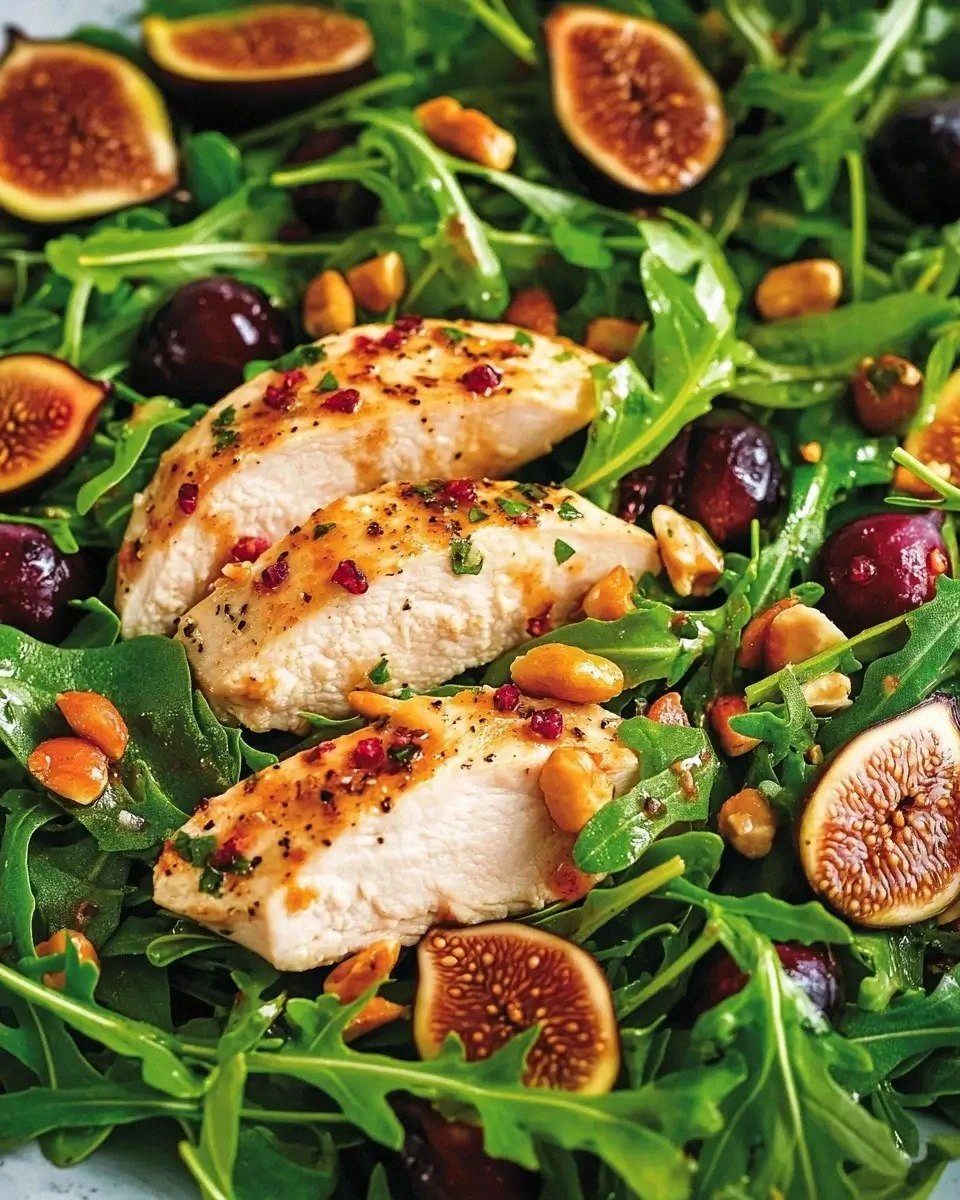
Slice the rested chicken breasts against the grain into thin strips. Arrange the chicken on top of the arugula, then spoon the warm fig dressing over everything, ensuring each leaf gets a glossy coating. Sprinkle toasted pine nuts, shaved Parmesan, and an extra pinch of smoked paprika for garnish.
Kitchen Hack: Use a serrated knife to slice the chicken; it creates clean cuts without shredding the meat.
That's it — you did it. But hold on, I've got a few more tricks that'll take this to another level...
Insider Tricks for Flawless Results
The Temperature Rule Nobody Follows
Never cook chicken straight from the fridge; let it sit at room temperature for 20 minutes. This small step evens out the internal temperature, allowing the sear to form quickly without the meat pulling away from the pan. I once tried to skip this step and ended up with a gray‑ish edge that looked like a culinary crime scene. Trust me, the difference is night and day.
Why Your Nose Knows Best
When you deglaze with wine, listen for the subtle hiss that signals the alcohol is evaporating. If the pan starts to smoke heavily, lower the heat—over‑reduction can make the dressing bitter. Your nose is a built‑in kitchen sensor; follow it, and you’ll avoid a sour disaster.
The 5‑Minute Rest That Changes Everything
After the oven finishes, tent the chicken with foil and let it rest for exactly five minutes. This pause lets the juices redistribute, turning every slice into a succulent bite rather than a dry chew. Skipping this rest is the most common mistake I see on food blogs, and it’s why many salads end up with sad, stringy chicken.
Fig Softening Secrets
If your figs are stubbornly firm, add a splash of water (about 2 tablespoons) before the balsamic. The extra moisture creates steam, coaxing the figs to soften without turning them into mush. This trick is a lifesaver when using older dried figs that have hardened over time.
Pine Nut Toasting Perfection
Toast pine nuts in a dry skillet over low heat, shaking the pan constantly. They’ll turn golden in 2‑3 minutes and release a buttery aroma that elevates the whole dish. Burnt pine nuts are a no‑no; they add bitterness that clashes with the sweet figs.
Creative Twists and Variations
This recipe is a playground. Here are some of my favorite ways to switch things up:
Mediterranean Muse
Swap the chicken for grilled halloumi cubes and add a handful of Kalamata olives. The salty cheese pairs beautifully with the figs, creating a vegetarian version that still packs protein.
Spicy Southwest
Add a pinch of chipotle powder to the chicken seasoning and toss in some roasted corn kernels. The smoky heat balances the sweet figs and gives the salad a sunny, southwestern vibe.
Autumn Harvest
Replace dried figs with fresh pear slices and drizzle a maple‑balsamic reduction instead of honey. This version feels like a fall festival on a plate, perfect for September gatherings.
Asian Fusion
Introduce a splash of soy sauce and a dash of toasted sesame oil to the dressing, and sprinkle toasted sesame seeds over the top. The umami depth adds an unexpected but delightful twist.
Nut‑Free Crunch
If you have a nut allergy, replace pine nuts with roasted chickpeas seasoned with smoked paprika. The chickpeas give a satisfying crunch while keeping the flavor profile intact.
Storing and Bringing It Back to Life
Fridge Storage
Store the cooked chicken in an airtight container for up to 3 days. Keep the arugula and dressing separate; the greens stay crisp for 2 days when wrapped in a dry paper towel and placed in a zip‑top bag. When ready to serve, simply re‑assemble and drizzle the warmed dressing.
Freezer Friendly
You can freeze the cooked chicken strips on a parchment sheet, then transfer them to a freezer bag. They’ll keep for up to 2 months. The figs and dressing freeze well too; just thaw in the refrigerator overnight and gently re‑heat in a saucepan.
Best Reheating Method
To revive the chicken, place it in a preheated 300°F (150°C) oven for 8‑10 minutes, or quickly sear in a hot pan for 2 minutes per side. Before serving, add a tiny splash of water (about 1 tablespoon) to the dressing and warm it over low heat; the steam will bring back that glossy sheen and fresh aroma.