Picture yourself standing in a bright kitchen, the air filled with the scent of fresh asparagus and a splash of citrus. I was halfway through a disastrous attempt at a spring salad when I realized I needed a new approach—one that would turn every bite into a celebration. I grabbed a handful of bright green stalks, the kind that snap with a satisfying crack, and started to think about what could make this dish unforgettable. The idea hit me like a bolt: a salad that’s not only crisp and vibrant but also layered with flavors that dance on your tongue. I’m talking about a dish that feels like a burst of sunshine, where each ingredient has a purpose and a personality. Trust me, by the time you finish this guide, you’ll be craving a plate of this salad more than any other.
Now, let’s talk about why this version is hands down the best you’ll ever make at home. First, it balances textures so that each bite feels fresh, crunchy, and indulgently creamy—all at once. Second, the dressing is a tangy, silky blend that coats the greens like velvet, giving the salad an irresistible finish. Third, the use of fresh, seasonal asparagus gives the dish a natural sweetness that’s hard to beat. Fourth, the recipe is so simple that even a beginner can master it in under twenty minutes. Fifth, it’s a crowd-pleaser, perfect for dinner parties or a quick weekday meal. And finally, it’s adaptable—swap feta for goat cheese, or add nuts for a crunch. I dare you to taste this and not go back for seconds.
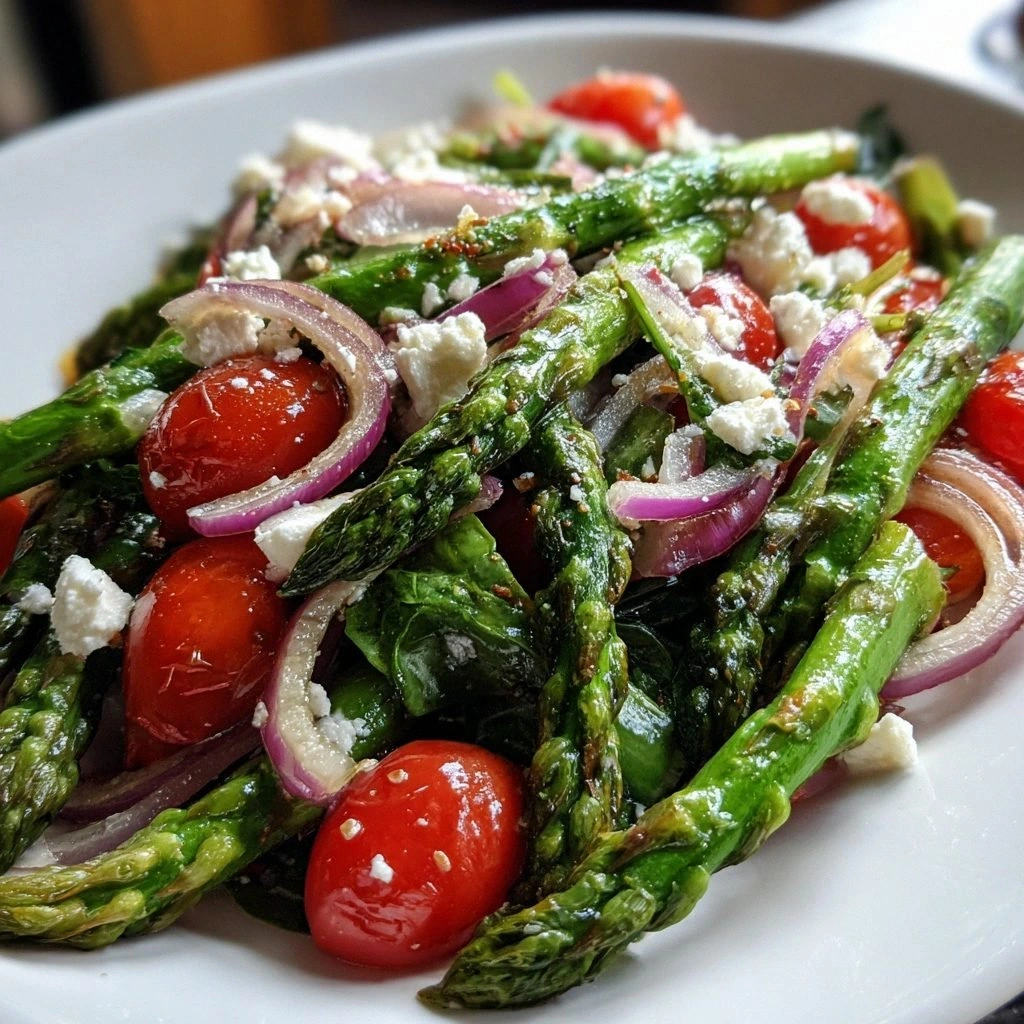
But before we dive into the cooking, let’s set the scene. Imagine the first bite—crisp asparagus with a subtle nuttiness, bright cherry tomatoes bursting with juice, and a hint of salty feta that melts in your mouth. The aroma of olive oil and balsamic vinegar mingles with the fresh greens, creating a heady scent that makes you want to keep eating. The sound of the salad bowl as you toss the ingredients is almost meditative, a gentle clinking that signals the start of something special. The texture of the mixed greens, lightly wilted by the dressing, offers a satisfying bite that’s not too soft or too hard. And the visual appeal—green, red, white, and a splash of gold—makes the dish look as good as it tastes. Picture yourself pulling this out of the oven, the whole kitchen smelling incredible, and feeling like a culinary wizard.
Let me walk you through every single step—by the end, you’ll wonder how you ever made it any other way. I’ll share the secret techniques, the exact timing, and the little tricks that elevate this salad from ordinary to extraordinary. And if you’ve ever struggled with this, you’re not alone—I've got the fix. Stay with me here, because this is worth it.
What Makes This Version Stand Out
- Flavor: The combination of fresh asparagus, bright cherry tomatoes, and tangy feta creates a symphony of flavors that is both refreshing and satisfying.
- Texture: Each ingredient offers a unique bite—crunchy asparagus, juicy tomatoes, and creamy feta—resulting in a salad that feels alive with every mouthful.
- Simplicity: With only eight steps and a handful of ingredients, this recipe is approachable for cooks of all skill levels.
- Versatility: Swap the greens or the cheese to suit your taste or dietary needs; the core flavor profile remains intact.
- Visual Appeal: The vibrant colors of the ingredients make the dish a feast for the eyes as well as the palate.
- Nutrition: Packed with vitamins, minerals, and healthy fats, this salad is as wholesome as it is delicious.
- Time Efficiency: From prep to plate, the entire process takes less than twenty minutes.
- Make‑ahead Potential: The dressing can be made a day ahead, and the salad holds well in the fridge for up to two days.
Alright, let's break down exactly what goes into this masterpiece. Everything's prepped? Good. Let’s get into the real action.
Inside the Ingredient List
The Flavor Base
The foundation of this salad starts with the asparagus. Fresh, firm stalks that snap easily are the gold standard; they bring a mild, earthy sweetness that’s essential. If you use a tender variety, you’ll get a delicate crunch that pairs perfectly with the dressing. Skipping asparagus would leave the salad feeling empty; it’s the star that holds everything together.
Next, the mixed greens provide the canvas. A blend of spinach, arugula, and spring mix offers both color and bite. Spinach adds a mild, slightly sweet note, while arugula contributes a peppery kick. The mix ensures a balanced flavor profile that’s neither too mild nor too intense.
The Texture Crew
Cherry tomatoes bring a juicy burst of sweetness. Their bright red color and tender flesh contrast beautifully with the crisp asparagus. Halving them allows the dressing to seep into every bite, amplifying the overall flavor. If you prefer a drier texture, you can cherry-pick the larger varieties for a slightly firmer bite.
Red onion adds a sharp, slightly sweet edge that cuts through the richness of the feta. Thinly sliced, it provides a subtle crunch that keeps the salad from becoming mushy. Soaking the slices in cold water for a few minutes reduces their bite if you’re sensitive to onions. Skipping the onion would leave the salad lacking that bright, zesty counterpoint.
The Unexpected Star
Feta cheese is the creamy, tangy component that ties the dish together. Its crumbly texture offers a pleasant contrast to the crisp vegetables, while its saltiness elevates the overall flavor. If you’re dairy‑free, goat cheese or a plant‑based alternative can work, but the unique taste of feta is hard to replace.
The olive oil and balsamic vinegar create the dressing that binds everything. A good quality extra virgin olive oil adds depth and a fruity undertone, while the balsamic vinegar provides a sweet tang that balances the salad’s richness. Together, they coat each ingredient like velvet, making every bite luxurious. If you don’t have balsamic, a splash of lemon juice or apple cider vinegar will still deliver a bright, refreshing finish.
The Final Flourish
Seasoning is the final touch that brings the salad to life. A pinch of salt and pepper enhances the natural flavors without overpowering them. Salt draws out moisture, helping the dressing adhere better, while pepper adds a subtle heat. If you prefer a milder taste, reduce the salt or use sea salt for a more nuanced flavor.
Everything's prepped? Good. Let’s get into the real action.
The Method — Step by Step
- Trim the asparagus ends by snapping them at the natural break point. This simple technique ensures clean, uniform cuts and removes any woody tips. Rinse the stalks under cold water to remove grit. Pat them dry with a paper towel; moisture will prevent crispness.
- Heat a non‑stick skillet over medium‑high heat. Add a splash of olive oil, just enough to coat the pan. When the oil shimmers, toss in the asparagus. Cook for 3–4 minutes, turning occasionally, until the stalks are bright green and just tender.
- Remove the asparagus from the skillet and let it rest on a plate. While it’s still hot, sprinkle a pinch of salt and a dash of pepper to enhance its natural sweetness. This step is crucial for locking in flavor; don’t skip it. The asparagus should still be slightly crisp, not mushy.
- In a large bowl, combine the mixed greens, halved cherry tomatoes, and thinly sliced red onion. Toss gently to distribute the ingredients evenly. The greens should be fresh, slightly wilted by the dressing, but not soggy. Keep the bowl chilled if you’re preparing the salad ahead of time.
- Whisk together the olive oil, balsamic vinegar, a teaspoon of Dijon mustard, and a pinch of salt in a small bowl. This vinaigrette will coat the salad like velvet, giving it a silky finish. Add the vinaigrette to the bowl and toss until every leaf is glistening. Watch Out: If you pour the dressing too quickly, it may pool on the greens, causing a soggy salad.
- Add the warm asparagus to the bowl. The heat from the asparagus will slightly soften the greens, creating a delightful temperature contrast. Gently fold the asparagus in, ensuring each stalk is coated with dressing.
- Crumbled feta cheese is the final touch. Sprinkle it over the salad and give one last gentle toss. The feta’s salty tang will balance the sweet tomatoes and the earthy asparagus. This step is pure magic.
- Serve immediately on a chilled plate. The salad tastes best when the greens are crisp, the asparagus is slightly warm, and the feta is fresh. If you prefer a more robust flavor, drizzle an extra splash of olive oil or a squeeze of lemon juice before plating.
- Enjoy! The combination of textures and flavors will keep you coming back for more. I dare you to taste this and not go back for seconds.
That’s it—you did it. But hold on, I’ve got a few more tricks that’ll take this to another level.
Insider Tricks for Flawless Results
The Temperature Rule Nobody Follows
Keeping the greens cold is key. Chill the bowl and the dressing in the fridge for ten minutes before tossing. The cold environment helps the greens retain their crunch and prevents them from wilting in the dressing. I’ve seen salads that look great but feel soggy because the greens were left at room temperature. By keeping everything cool, you preserve texture.
Remember to use a dressing that’s slightly acidic. A touch of vinegar or citrus juice will help the greens stay crisp. This trick is especially useful on hot days when salads tend to wilt quickly.
Why Your Nose Knows Best
Smell is a powerful indicator of freshness. If the asparagus has a sharp, green aroma, it’s at its peak. If it smells musty, it’s time to toss it. The same applies to the feta; a tangy scent indicates freshness. I’ve had a friend skip this step and end up with a salad that tasted flat.
The same rule applies to the dressing. A bright, slightly acidic scent signals that the vinaigrette is well-balanced. If it smells overly sharp or burnt, you’ve overdone the vinegar.
The 5-Minute Rest That Changes Everything
After tossing the salad, let it rest for five minutes before serving. This allows the flavors to meld and the dressing to coat the greens evenly. The rest period also lets the asparagus cool to a pleasant temperature, creating a contrast between warm and cool. I’ve tried skipping this step, and the salad felt rushed.
If you’re in a hurry, you can skip the rest period, but you’ll miss the subtle depth that develops during this brief pause.
The Secret Ingredient: A Dash of Honey
Adding a teaspoon of honey to the vinaigrette balances the acidity and adds a subtle sweetness that complements the cherry tomatoes. Honey also helps the dressing adhere better to the greens. Some people prefer to use maple syrup for a different flavor profile, but honey remains the classic choice.
If you’re vegan or dairy‑free, you can skip the honey and add a splash of maple syrup instead. The result is still delicious.
The Final Touch: A Splash of Lemon
A squeeze of fresh lemon juice right before serving adds brightness and cuts through the richness of the feta. The citrus also helps keep the greens crisp by preventing oxidation. I’ve found that a light squeeze of lemon can transform a good salad into an unforgettable one.
If you’re allergic to citrus, you can substitute with a splash of white wine vinegar for a similar effect.
Creative Twists and Variations
This recipe is a playground. Here are some of my favorite ways to switch things up:
Mediterranean Twist
Swap feta for crumbled goat cheese and add a handful of kalamata olives. The briny olives bring a depth of flavor that pairs wonderfully with the sweet tomatoes. Toss in some chopped fresh basil for an aromatic finish. This version feels like a vacation in every bite.
If you’re craving something heartier, add sliced grilled chicken for protein. The chicken’s smoky flavor complements the bright greens and the tangy dressing.
Nutty Crunch
Top the salad with toasted almonds or walnuts for an extra crunch. The nuts add a buttery texture and a nutty aroma that enhances the overall flavor. Sprinkle a pinch of smoked paprika for a subtle smokiness.
The nuts also provide healthy fats, making this salad more filling and satisfying.
Summer BBQ Flavor
Add a few slices of grilled peach or mango for a sweet, smoky contrast. The fruit’s caramelized edges pair beautifully with the asparagus. Drizzle a bit of chipotle-infused honey for heat. This version feels like a sunny afternoon picnic.
If you prefer a more savory approach, add a handful of roasted corn kernels for added sweetness and texture.
Vegan Variation
Replace feta with crumbled vegan cheese or a sprinkle of nutritional yeast. Use a vegan olive oil and a splash of apple cider vinegar for the dressing. This version maintains all the flavor while keeping it plant‑based.
Add a handful of chickpeas for protein and a hearty bite. The chickpeas also add a creamy texture that mimics the feta’s richness.
Breakfast Boost
Serve the salad over a bed of sautéed spinach and top with a poached egg. The runny yolk adds richness and a velvety texture. Drizzle a bit of truffle oil for an indulgent twist.
This version turns a simple salad into a brunch staple that’s both nutritious and decadent.
Storing and Bringing It Back to Life
Fridge Storage
Store the salad in an airtight container for up to two days. Keep the dressing separate until you’re ready to eat to prevent sogginess. When you’re ready to serve, toss the dressing back in and give it a quick stir.
If you’re in a rush, you can keep the salad in the fridge for up to 48 hours. The flavors will intensify, making it even more delicious.
Freezer Friendly
This salad is not ideal for freezing due to the delicate greens. However, you can freeze the asparagus separately in an airtight bag. Thaw and reheat before adding to the salad.
Alternatively, freeze the dressing and reheat it gently on the stove. This way, you preserve the freshness of the greens.
Best Reheating Method
If you need to reheat the asparagus, do it briefly in a hot skillet for 30 seconds on each side. This will revive its crunch without overcooking. Add a splash of water before reheating to steam it back to life.
Do not microwave the salad; the heat will ruin the texture and flavor.